
Furnace Installation in Lexington, KY
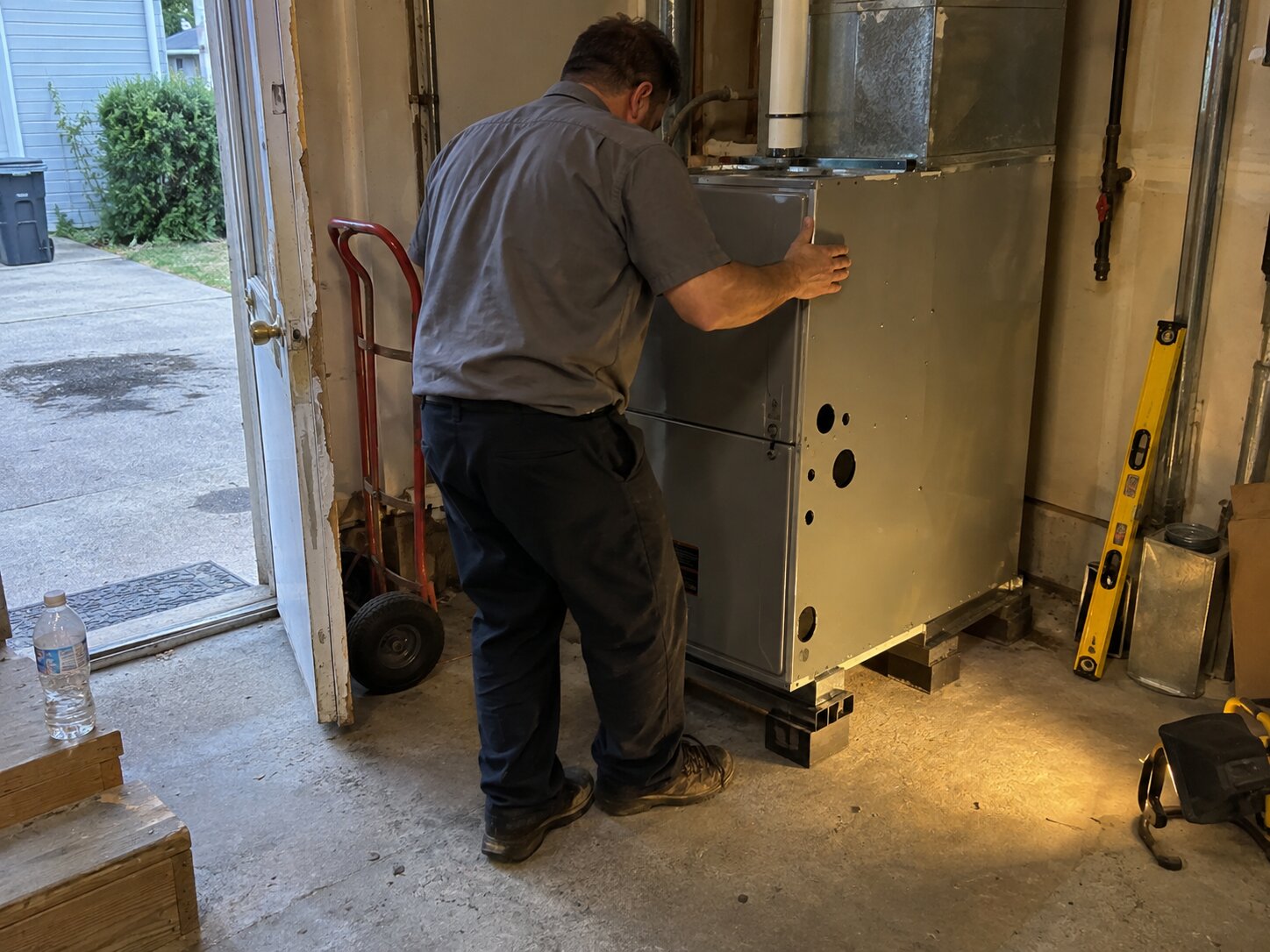
A new furnace is a fifteen-to-twenty-year decision. It will run roughly 1,500 to 2,500 hours per heating season in central Kentucky, navigate every cold-damp January and shoulder-season swing, and either keep your family warm without drama or surface every shortcut the installer took. The brand on the cabinet matters less than the marketing makes it sound. What actually determines whether the system runs reliably for two decades is whether it was sized correctly for the home, whether the combustion air and venting were engineered to the climate, whether the gas connection and electrical work were done to code, and whether the system was commissioned to manufacturer specification before the technicians went home. Lexington Heating and Air installs furnaces across Fayette County to that standard — from 1920s brick homes in Ashland Park getting their first condensing furnace upgrade to new construction in Andover commissioning a modulating system.
What “Right-Sizing” Actually Means for a Furnace
The standard mistake on furnace installations is the same as on AC: oversizing. A furnace too large for the home heats fast and shuts off, then comes back on, then shuts off — short-cycling that wears the equipment, drives up bills from constant ignition cycles, and creates noticeable temperature swings between cycles. Oversized furnaces also struggle to keep a home evenly heated; bedrooms farthest from the supply registers stay cold while the thermostat-area satisfies and shuts the system off.
A right-sized furnace runs longer, gentler cycles. The duct work has time to deliver heat evenly through the house. The equipment ignites fewer times per day, which extends component life (igniters, gas valves, pressure switches, inducer motors all have ignition-cycle-rated lifespans). The combustion process runs in its design envelope. Right-sizing is the difference between a furnace that lasts to year 20 and one that fails at year 13.
Sizing comes from a Manual J load calculation, performed before equipment is selected. We account for square footage, ceiling height, window count and orientation, insulation level, air infiltration, and zone-by-zone exposure. A 1928 Chevy Chase brick home with original double-hungs and minimal insulation can carry a heating load roughly double a 2022 Andover home at the same square footage — meaning a 100,000 BTU furnace might be correct in one and grossly oversized in the other.
AFUE: What Furnace Efficiency Actually Means
AFUE stands for Annual Fuel Utilization Efficiency. It measures what percentage of the gas energy you pay for actually becomes useful heat in your home. A 95% AFUE furnace converts 95% of the gas to heat, with 5% lost to the flue. An 80% AFUE furnace loses 20%.
The two practical categories of modern residential gas furnaces:
- 80% AFUE (non-condensing). Uses a single heat exchanger and vents through a conventional metal flue (typically Type B). Lower first cost. Loses meaningful efficiency to flue gases that exit hot. Best fit when budget is tight, the existing flue is configured for it, or the home isn’t intended for long-term ownership.
- 90–98% AFUE (condensing). Uses a secondary heat exchanger that extracts additional heat from combustion gases, cooling them enough to condense water vapor (hence “condensing”). Vents through PVC pipe through a sidewall rather than up a chimney. Requires a condensate drain. Higher first cost, lower operating cost — the efficiency difference shows up on every gas bill for twenty years.
In central Kentucky, where heating season is long enough to make efficiency genuinely matter, a condensing furnace usually wins on lifecycle cost — especially when paired with available Section 25C federal tax credits for qualifying high-efficiency equipment.
Our Installation Process
- Manual J load calculation. Room-by-room heating load based on the home’s actual envelope, not square footage rules of thumb.
- Manual S equipment selection. Matching equipment capacity to the calculated load. We size to the design heating load, not 30% above it.
- Manual D duct verification. Confirming existing ductwork can deliver the new system’s design airflow without exceeding static pressure limits. Older homes especially benefit from this check.
- Combustion air planning. Verifying adequate combustion and make-up air, particularly important in tightly built newer homes where insufficient air can cause backdrafting from other appliances.
- Venting engineering. Routing the appropriate venting material (B-vent or class B for 80% AFUE; PVC/CPVC for condensing) with correct slopes, support, and termination clearances.
- Itemized written estimate. Equipment, labor, permit fees, condensate work, electrical, gas piping, line set if integrated with the AC, and any required modifications — each broken out.
- LFUCG permitting. Permits pulled through the Lexington-Fayette Urban County Government Division of Building Inspection where required. Unpermitted gas work can void homeowner insurance and surface at home sale.
- Installation. Drop cloths, shoe covers, clean job site at end of day.
- Commissioning. Combustion analysis with a calibrated analyzer (CO, O₂, flue temperature, stack efficiency). Manifold pressure verified to nameplate specification. Gas leak test on every joint with electronic detection. Static pressure measured. Temperature rise verified against the rating plate range.
- Walkthrough. How the system operates, what maintenance it needs, what to expect from the first heating season, what to call about.
Signs It’s Time for a New Furnace
- The furnace is 15–20 years old and has started needing repairs more often.
- Heating bills are climbing without a usage change — an old 70% AFUE furnace is leaving real money on the table compared to a modern 95% unit.
- The heat exchanger has cracked or shows signs of imminent failure (rust streaks, soot, irregular flame patterns).
- Repairs are exceeding roughly a third of replacement cost.
- Yellow rather than blue burner flames, persistent soot, or repeated CO detector alerts.
- You’re considering switching to a heat pump for both heating and cooling — particularly relevant given the Climate Zone 4A suitability and Section 25C credit eligibility.
Frequently Asked Questions
- What size furnace do I need for my Lexington home?
- The correct size comes from a Manual J load calculation, which accounts for square footage, ceiling height, window count and orientation, insulation level, and air infiltration. A 1920s Ashland Park home with original windows can carry roughly double the heating load of a tightly built newer Andover home at the same square footage. Oversizing causes short-cycling, uneven heating, and shortened component life, so right-sizing matters more than it sounds.
- Is a 95% AFUE condensing furnace worth the extra cost?
- In central Kentucky, usually yes. Our heating season is long enough that the efficiency difference between an 80% and 95% AFUE furnace shows up meaningfully on every gas bill for the equipment’s full life. Condensing furnaces also typically qualify for federal Section 25C tax credits, and the lifecycle math tends to favor the higher-efficiency unit. Lifecycle cost depends on your specific home, gas rates, and ownership horizon, which we walk through honestly during the quote.
- How long does furnace installation take?
- A straightforward replacement of an existing furnace typically takes 6 to 8 working hours, most of one day. Installations involving venting changes (especially switching from 80% AFUE B-vent to 95% AFUE PVC sidewall), ductwork modifications, or gas line work can take a day and a half to two days. Switching from a furnace to a heat pump is a different scope. We give you a clear timeline as part of the itemized estimate.
- What’s the difference between 80% and 95% AFUE?
- AFUE measures the percentage of gas energy that becomes useful heat. An 80% AFUE furnace converts 80% to heat (20% lost out the flue); a 95% AFUE converts 95% (only 5% lost). The 95% unit is “condensing,” meaning it extracts so much heat that combustion gases cool enough to condense water vapor, which is then drained. Condensing furnaces vent through PVC sidewall rather than up a chimney.
- Do you offer financing on a new furnace?
- Yes. We offer financing options to help Fayette County homeowners spread the cost of a new furnace over manageable monthly payments. Federal Section 25C tax credits may also apply to qualifying high-efficiency furnaces (and heat pumps) installed in your principal residence. Confirm tax credit eligibility with a tax professional; visit our financing page for more on financing.
Get a Right-Sized Furnace Installed
Don’t settle for guesswork on a twenty-year decision. Our licensed technicians size every system for your home, commission it to specification, and pull permits where required across Lexington and Fayette County.
- Phone: (859) 215-5241
- Address: 343 Cassidy Ave, Lexington, KY 40502
- Email: [add business email before publishing]