
Furnace Repair in Lexington, KY
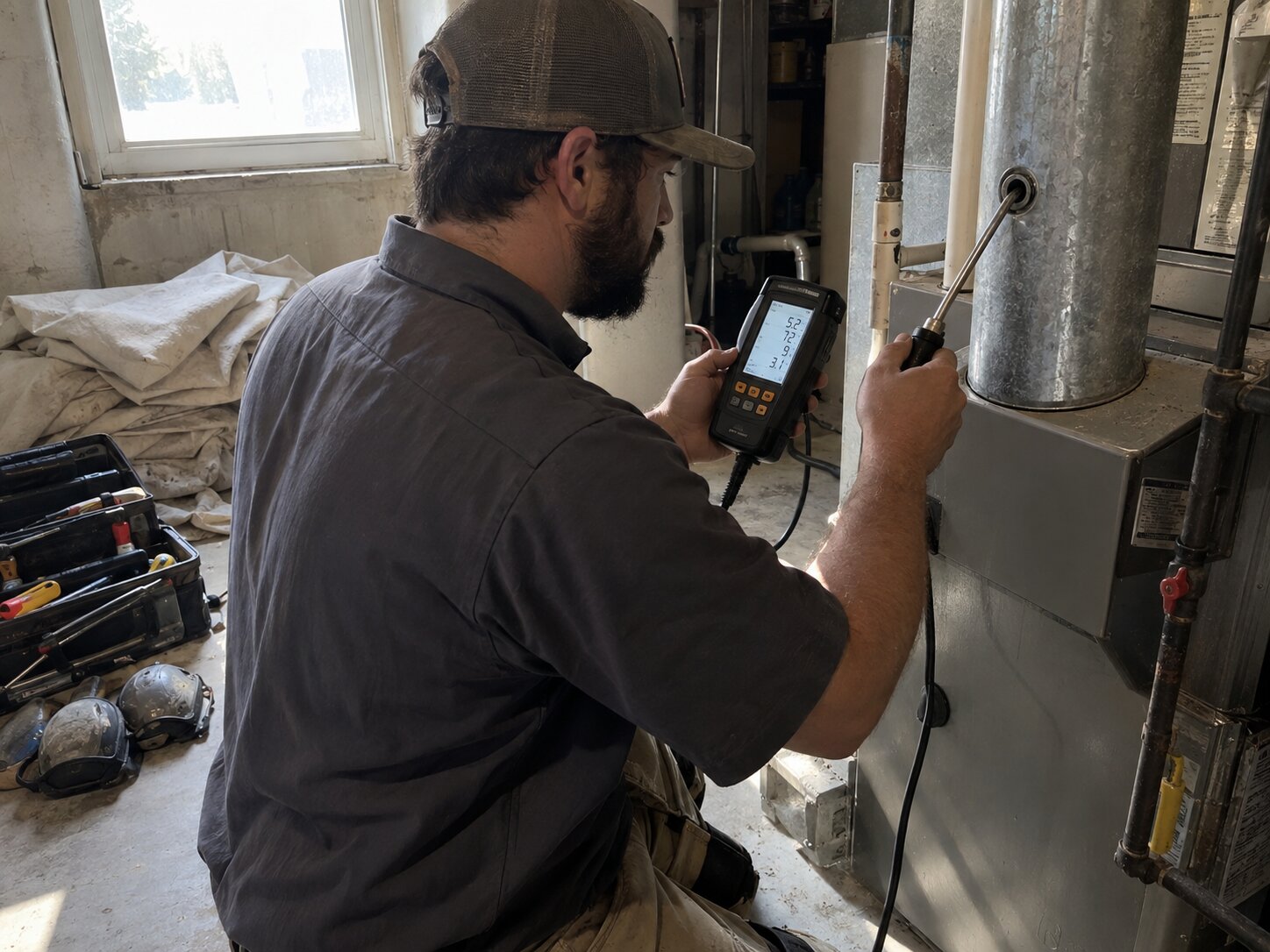
The phone rings at 11:47 p.m. The voice on the other end is a homeowner in Kenwick whose furnace stopped firing two hours ago, whose thermostat now reads 58°F, and whose two-year-old is asleep upstairs. The outside temperature is 14°F. That call is the one we built this company to answer well. Lexington Heating and Air repairs furnaces across Fayette County the way every repair should be done in our climate: arrive fast when it matters, diagnose with measurements rather than guesses, quote the actual fault, and bring the parts that fix the most common Lexington furnace failures rather than scheduling a return trip. A no-heat call on a January night is a real safety situation, not a service-ticket priority code.
The Most Common Furnace Failures We See in Lexington
Failed Flame Sensor
The single most common furnace fault we diagnose, period. The flame sensor is a small metal rod that proves to the control board that the burners actually lit when the gas valve opened — a safety device that shuts the gas off if there’s no flame. Over time the sensor accumulates oxidation (a thin coating that develops over years), the signal it sends back to the board weakens below the threshold, and the board cycles the gas off seconds after ignition. The symptom: burners light, then shut off after 5–7 seconds, then try again, sometimes for several cycles before the board locks out. Almost always a cleaning rather than a replacement. Inexpensive fix, dramatic improvement, very common on Lexington furnaces 5+ years old.
Failed Hot Surface Igniter
The igniter is a silicon-carbide or silicon-nitride element that glows orange-white to ignite the gas. Igniters degrade over thousands of heat cycles and eventually crack or fail to reach ignition temperature. The symptom: the inducer fan runs, the gas valve opens, no ignition, the system retries and locks out. Diagnosis is a continuity check with a meter; replacement is straightforward. Most central Kentucky furnaces need an igniter at some point in their service life, often around year 7–10.
Clogged Condensate Trap (90%+ AFUE Furnaces Only)
This one is specific to high-efficiency condensing furnaces. The condensing process produces several gallons of acidic water per day of heating operation, drained through a small trap and line to a floor drain or condensate pump. The line clogs from biological growth and mineral scale — particularly common in Lexington’s hard-water environment — backing water up into the pressure switch. The pressure switch then refuses to close, the control board sees no draft, and the furnace refuses to fire. The symptom looks like a pressure switch fault but the actual cause is a $5 cleaning. We see it every winter.
Stuck or Failed Pressure Switch
The pressure switch is a small safety device that confirms the inducer fan is pulling adequate draft before the gas valve is allowed to open. Switches can fail mechanically, or they can be doing their job correctly because something else (a blocked vent termination, a clogged condensate trap, a failed inducer) is preventing proper draft. The symptom: inducer runs but no ignition follows. Diagnosis requires distinguishing whether the switch itself failed or whether it’s reporting a real problem upstream — an important distinction we always test rather than guess.
Cracked Heat Exchanger
The most serious fault on the list. A cracked heat exchanger allows combustion gases (including carbon monoxide) to mix with the supply air being pushed through your home. Diagnosis involves visual inspection, often with a borescope camera, combined with combustion analyzer readings showing CO in the supply air. When we find one, we’ll show you the evidence rather than just announcing a verdict — you should see the crack on camera or the analyzer reading. A confirmed cracked heat exchanger means the furnace gets shut down and either the exchanger replaced (rare; usually only economical under warranty) or the furnace replaced. We do not condemn heat exchangers casually.
Other Common Faults
- Failed gas valve. Less common; usually presents as no gas flow despite proper draft and ignition attempts.
- Failed inducer motor. The motor pulling combustion gases through the heat exchanger. When it fails, the pressure switch correctly refuses to close.
- Failed blower motor or capacitor. No air movement despite the heat exchanger getting hot.
- Tripped high-limit switch. The safety device that shuts the burners off if the heat exchanger gets too hot — often points to airflow problems (clogged filter, closed registers, failing blower) rather than the switch itself.
- Thermostat issues. Sometimes the easy ones — a dead battery in a smart thermostat, a tripped circuit, a loose wire at the C-terminal.
Why “Measure Before You Quote” Matters Even More on Furnaces
Furnace symptoms are more deceptive than AC symptoms. The pressure switch that won’t close could be a $40 switch or a $5 condensate cleaning or a failed inducer or a blocked vent. A no-ignition could be a failed igniter or a closed gas valve or a clogged flame sensor preventing the system from holding flame on the previous cycle. The same control-board lockout code can mean different things. Without measurements — combustion analysis, manifold pressure check, gas pressure verification, draft pressure, voltage at each safety device — you’re guessing. And a contractor who guesses on a gas appliance can guess your money away on parts you didn’t need or, far more seriously, miss a CO safety condition.
Carbon Monoxide Safety
Every furnace repair visit we make includes a baseline check for carbon monoxide. We measure CO in the supply air with a calibrated analyzer (not just a hardware-store handheld). If we find a CO condition, we shut the furnace down until the source is identified and addressed — full stop. Every home with gas appliances should have working CO detectors on every level. If yours haven’t been tested in a year, test them today.
Repair or Replace?
A general guideline applies here as elsewhere: if the repair cost runs more than about a third of replacement, and the furnace is past roughly 70% of its expected life, replacement starts to make financial sense. A failed igniter on a 9-year-old 95% AFUE furnace is a clear repair. A failed inducer or pressure switch on a 17-year-old 78% AFUE unit is often the moment to evaluate a new condensing furnace or, for many Lexington homes, a heat pump with backup heat. We give you the honest math, including projected operating cost differences and any Section 25C tax credit eligibility on the replacement side.
Frequently Asked Questions
- Why is my furnace running but not heating the house?
- The most common causes, in roughly the order we find them: a dirty flame sensor (one of the most common faults on furnaces 5+ years old), a failed hot surface igniter, a clogged condensate trap on a 90%+ AFUE high-efficiency unit, a stuck pressure switch, or a thermostat issue. Each has the same symptom but a very different repair cost, which is why we diagnose with measurements rather than guessing.
- Is it safe to keep using my furnace until you arrive?
- It depends on the symptom. If you smell gas, hear unusual noises, see soot or yellow burner flame, or your CO detector has alerted, turn the gas off at the appliance shutoff and call us immediately. For a furnace that simply isn’t heating, you’re generally safe waiting, but if the house is getting cold and you have vulnerable household members (infants, elderly, anyone with health conditions), let us know on the call so we can prioritize accordingly.
- How much does furnace repair cost?
- It depends entirely on the failure, which is why we diagnose before quoting. A flame sensor cleaning is one of the most affordable repairs in HVAC. A failed igniter is also relatively inexpensive. A failed inducer motor, gas valve, or control board costs considerably more. After we test the system, you receive a clear, itemized price before any work begins. No surprises.
- Why did the contractor say I need a new furnace?
- Sometimes that’s correct — particularly if the heat exchanger is cracked and confirmed visually. Sometimes it’s not. Heat exchanger failures specifically can be over-diagnosed because the diagnosis is hard to verify without good equipment, and replacement is a big sale. If you’ve been told you need a new furnace and the diagnosis felt rushed or you weren’t shown the evidence, a second opinion is reasonable. We’ll inspect with a borescope and combustion analyzer and show you what we find.
- Do you offer 24/7 emergency furnace repair?
- [Confirm your specific emergency availability before publishing — whether you offer 24/7 or after-hours service, the after-hours phone number or call routing, and any associated fees. A no-heat call on a 14°F night is genuinely time-sensitive, and a clear answer here matters for the homeowner facing it.]
Get Heat Back On Today
When the furnace quits and the house is cooling, you don’t have time for guesswork. Our technicians diagnose with measurements, carry the parts that fix the most common Lexington furnace failures, and respect that a no-heat call is a real situation. Across Fayette County.
- Phone: (859) 215-5241
- Address: 343 Cassidy Ave, Lexington, KY 40502
- Email: [add business email before publishing]