
AC Installation in Wilmore, KY
AC installation in Wilmore differs from larger markets primarily in scale. The residential properties in this Jessamine County college town tend toward smaller homes built across the late 1800s through mid-1900s, with modest lots and the small-town vernacular construction of the period. The cooling loads are typically more modest than the larger newer homes in subdivisions elsewhere in our service area, but the installation discipline still matters — oversized equipment in a small home creates short-cycling and humidity problems just as severely as oversized equipment in a larger one. Faculty housing around the Asbury campuses tends to be owner-occupied with the maintenance attentiveness owner-occupants bring. Rental properties for the academic community follow a different equipment lifecycle pattern, with landlord priorities shaping installation decisions. Lexington Heating and Air installs air conditioning across Wilmore with the same Manual J-based discipline we apply across our service area — the right answer for the specific home, not a rule of thumb scaled to the town.
What’s Different About AC Installation in Wilmore
Smaller-Scale Residential
Most Wilmore homes are smaller than the larger new construction we work on in Lexington’s growth-era subdivisions. Single-story bungalows, two-story homes on modest lots, and the typical small-town vernacular construction of the late 1800s through mid-1900s. The cooling loads work out smaller, but the same installation discipline applies: Manual J load calculation for the specific home, equipment sized to that calculation rather than a rule of thumb, proper commissioning. Smaller homes are actually easier to oversize because the rule-of-thumb numbers contractors use don’t scale down well to homes under 1,500 square feet.
Heritage Considerations on Older Construction
For Wilmore homes from the late 1800s and early 1900s, AC installation can involve the same retrofit considerations familiar from older Lexington and Versailles homes: ductwork not originally present, plaster walls and original windows driving higher loads per square foot, retrofitted forced-air systems from past decades that may or may not match the home’s actual needs. Ductless mini-split installation is often a better option than conventional retrofit for these homes — individual zone control, no ductwork required, often less intrusive than conventional retrofit work.
Faculty Housing
The owner-occupied homes around the Asbury campuses tend to be well-maintained with attentive owners and reasonable maintenance budgets. Installation conversations here are typical owner-occupant conversations: equipment selection based on lifecycle cost and comfort priorities, often with interest in higher-efficiency tiers and Section 25C tax credit eligibility.
Rental Property Installation
For landlords with rental properties serving the academic community, installation decisions involve different tradeoffs: capital cost against rental property cash flow, equipment lifecycle across portfolios, scheduling around academic calendar turnover. We work with landlords on individual property installations and portfolio-level decisions with honest discussion about what fits each situation.
Jessamine County Permitting
AC installations in Wilmore requiring permits go through Jessamine County rather than LFUCG, the same as Nicholasville. We pull permits as part of the work where required.
Why Oversizing Is the Most Common Installation Mistake (Even in Smaller Homes)
Contractors oversize for two reasons: larger equipment looks more impressive at sale, and rule-of-thumb sizing is easier than Manual J. In smaller homes, the consequences are actually worse than in larger ones — the cycling problems get amplified by the smaller building envelope:
- Short cycling. Oversized systems satisfy the thermostat quickly, shut off, then re-engage frequently. Brief cycles wear capacitors and starting components faster than design assumes.
- Poor dehumidification. AC removes humidity primarily by running long enough for moisture to condense on the cold coil. Oversized systems don’t run long enough; the home stays cool but clammy. Particularly problematic in older small-town construction with above-average air infiltration.
- Uneven cooling. Short cycles don’t give cool air time to distribute through the home.
- Higher operating cost. Frequent restart power draws reduce seasonal efficiency.
- Shortened equipment life. All components experience more cycles per year than designed for.
Our Installation Process
- In-home assessment — walk-through, existing equipment inspection, ductwork evaluation, electrical service review.
- Manual J load calculation — room-by-room cooling load based on the home’s actual envelope.
- System type recommendation — conventional split, ductless mini-split, or specialty option, based on the home and your priorities.
- Manual S equipment selection — matching capacity to the calculated load.
- Manual D duct verification on conventional installations.
- Refrigerant transition planning — new equipment uses R-454B (Opteon XL41), standard since 2025.
- Itemized written estimate — equipment, labor, permit fees, refrigerant, electrical, condensate work.
- Jessamine County permits pulled where required.
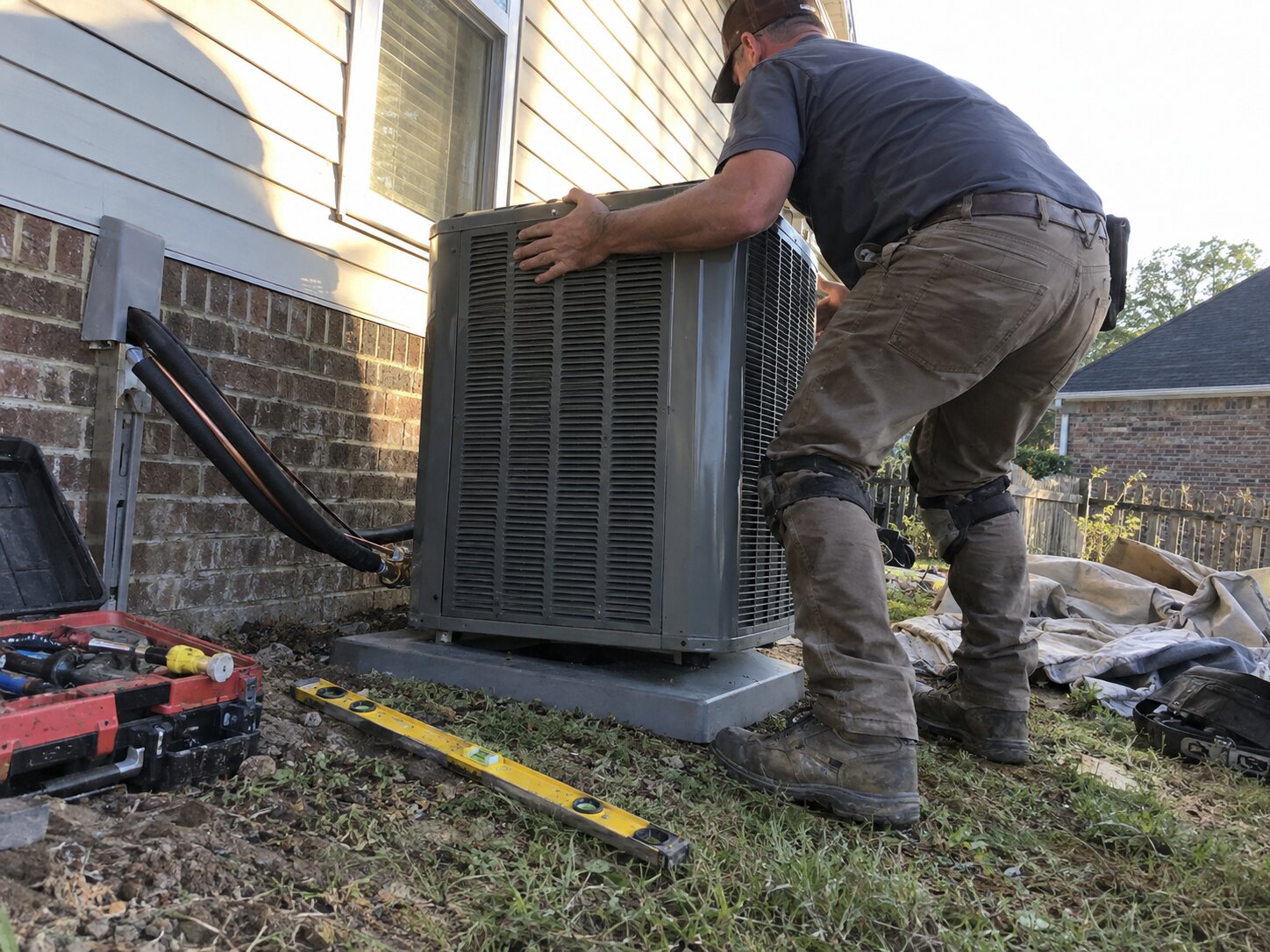
- Installation with drop cloths, shoe covers, clean job site.
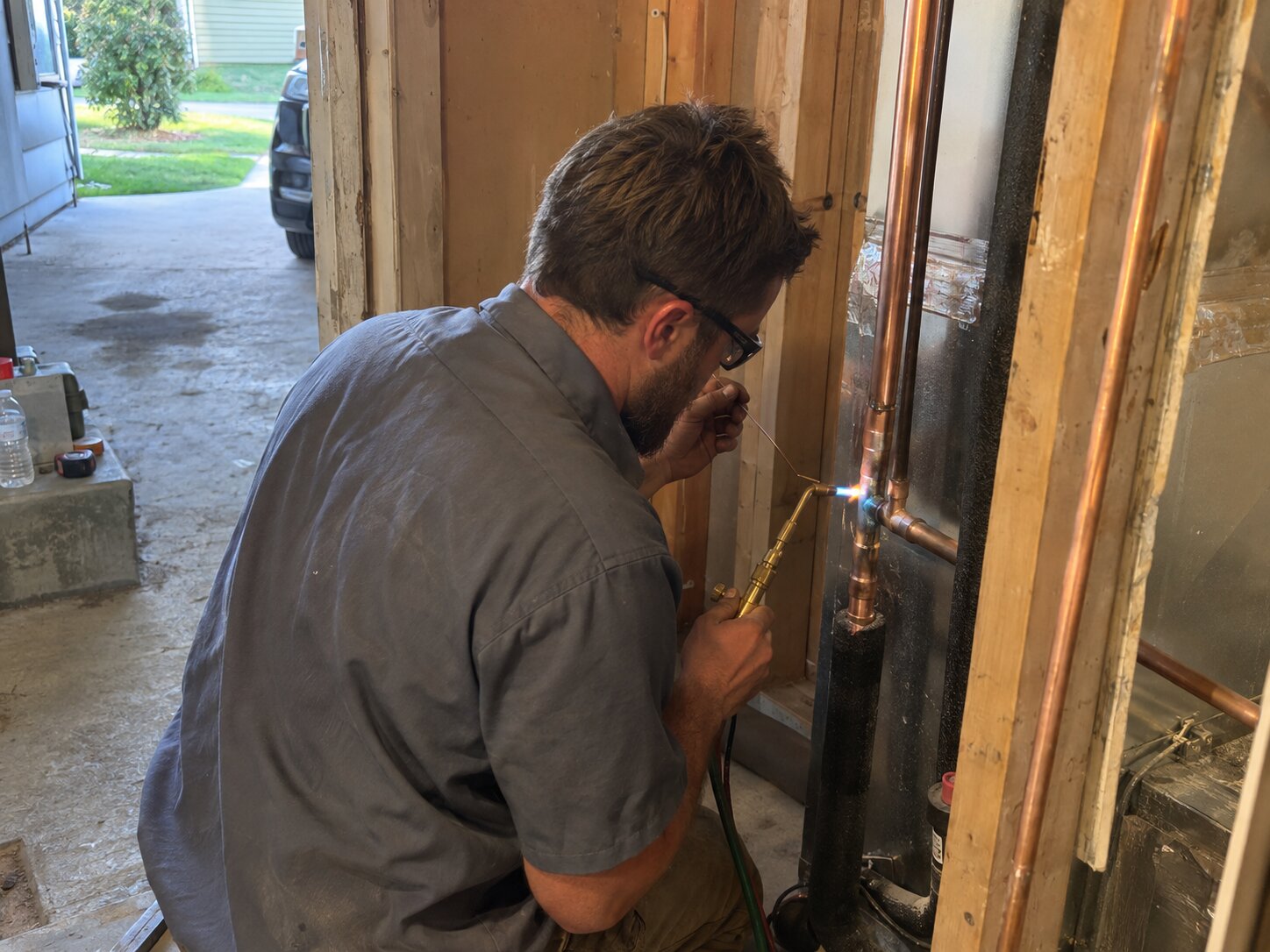
- Commissioning — system evacuated to 500 microns or below, weighed refrigerant charge, refrigerant pressures and superheat/subcooling verified, static pressure measured.
- Walkthrough on operation, maintenance schedule, warranty registration.
Federal Section 25C Tax Credit
Qualifying high-efficiency AC and heat pump installations may be eligible for the federal Section 25C Energy Efficient Home Improvement Credit, subject to IRS rules, equipment requirements, and annual limits. Heat pump installations often qualify under more generous terms. Confirm specific eligibility with a tax professional.
Frequently Asked Questions
- What size AC do I need for my Wilmore home?
- The right size comes from a Manual J load calculation. Wilmore homes are typically smaller than newer construction elsewhere in our service area, but Manual J still matters — smaller homes are actually easier to oversize because contractor rule-of-thumb numbers don’t scale down well. Oversizing causes short-cycling and humidity problems particularly noticeable in smaller spaces.
- How long does AC installation take in Wilmore?
- For straightforward conventional installation with existing compatible ductwork: typically one working day. For ductless mini-split installation: typically one to two days depending on zones. For heritage-home retrofits involving significant ductwork modification: several days or more.
- Do you work with landlords on rental property installations in Wilmore?
- Yes. Rental properties serving the Asbury University and Seminary academic community are part of our regular work. We discuss installation tier decisions honestly, recognizing that rental property economics weight capital cost differently than owner-occupant decisions.
- Should I consider ductless mini-splits for my older Wilmore home?
- Often yes, particularly for homes built before WWII that don’t have appropriate existing ductwork. Ductless installation avoids the cost and intrusion of retrofitting ductwork into walls that weren’t designed for it, while providing individual zone control. We assess the specific home and recommend honestly.
- Do you handle Jessamine County permits?
- Yes. AC installations in Wilmore requiring permits go through Jessamine County rather than LFUCG. We pull permits as part of the work where required and arrange inspection.
Schedule an Installation Assessment
For a small home on East Main Street where rule-of-thumb sizing would oversize the equipment dramatically, the conversation starts with Manual J. For an older home that’s never had central AC, the conversation usually starts with whether ductless mini-split makes more sense than conventional retrofit. For a rental property serving the Asbury community, the conversation weights capital cost and tenant turnover scheduling. Jessamine County permits where required.
- Phone: (859) 215-5241
- Address: 343 Cassidy Ave, Lexington, KY 40502
- Email: [add business email before publishing]