
Furnace Repair in Wilmore, KY
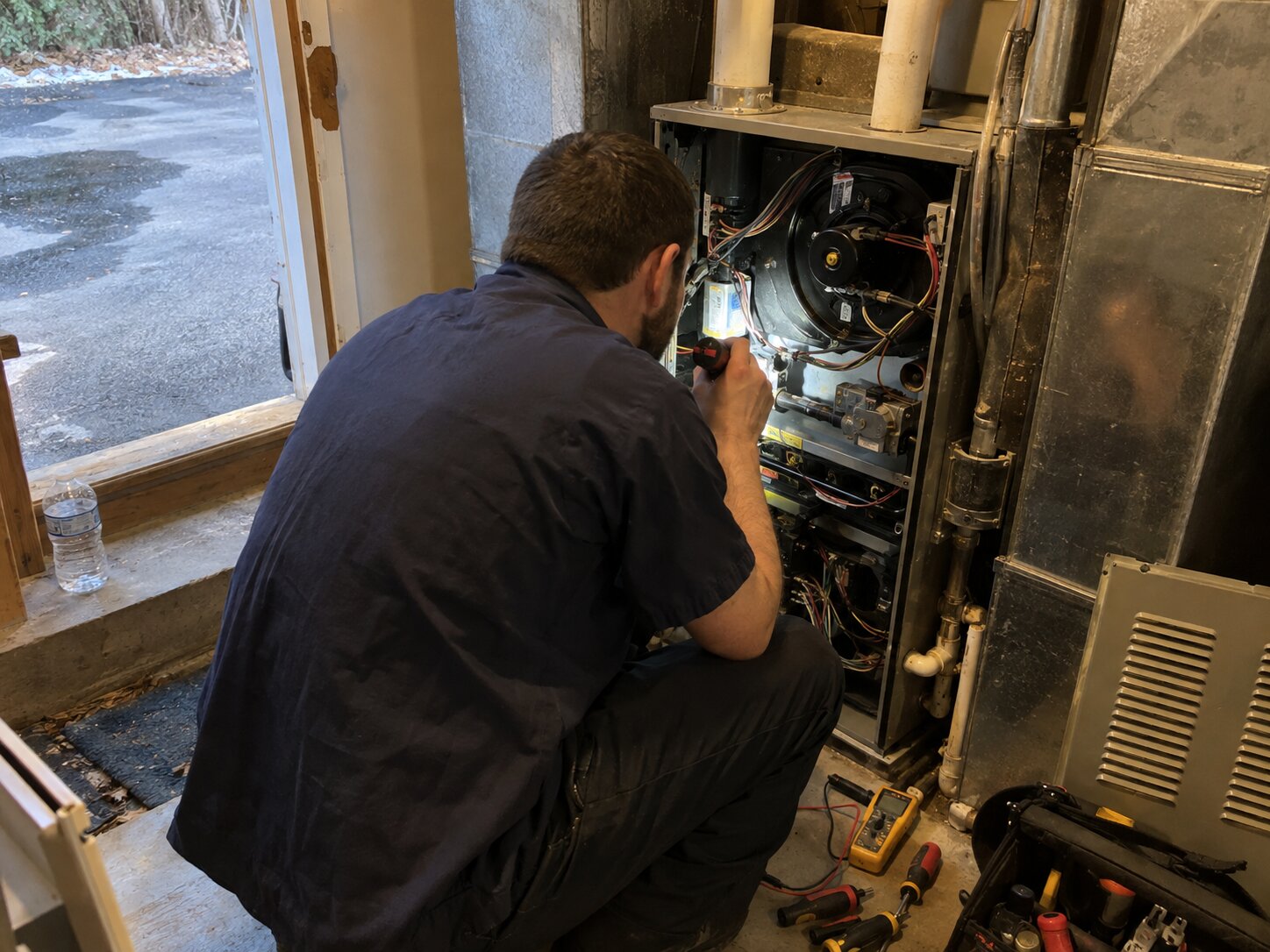
Furnace repair calls from Wilmore arrive against the same small-town context that shapes our AC work here: smaller residential properties with older equipment in many cases, faculty housing around the Asbury campuses where owner-occupants tend to be attentive about maintenance, and rental properties serving the academic community where equipment lifecycle decisions depend on owner attentiveness more than occupant priorities. The actual furnace failures we diagnose are familiar across our service area — flame sensors needing cleaning, igniters reaching end of service life, condensate trap clogs specific to Bluegrass hard water, occasional cracked heat exchangers that get over-diagnosed by less-disciplined contractors. The work is the same combustion-analyzer-based diagnostic discipline; the small-town context just changes how the relationships work. Lexington Heating and Air responds to furnace repair calls across Wilmore on the same dispatch and pricing as our Lexington home market.
The Most Common Wilmore Furnace Failures
Dirty Flame Sensor
The single most common no-heat call we make in winter, regardless of which community produces it. The flame sensor confirms the burners actually lit when the gas valve opened — a safety device that shuts gas off if no flame is detected. Over time, oxidation builds on the sensor, the signal weakens, and gas cycles off seconds after ignition. Symptom: burners light, shut off after 5–7 seconds, retry, lock out. Almost always a cleaning rather than a replacement.
Failed Hot Surface Igniter
The silicon-carbide or silicon-nitride element that glows orange-white to ignite gas. Degrades with thousands of heating cycles, eventually cracking or failing to reach ignition temperature. Symptom: inducer fan runs, gas valve opens, no ignition, lockout. Most central Kentucky furnaces need an igniter around year 7–10.
Clogged Condensate Trap (90%+ AFUE Furnaces)
Specific to high-efficiency condensing furnaces and specifically a hard-water-climate issue. The calcium-rich Bluegrass water serving Wilmore builds mineral scale that clogs the trap; backed-up condensate stalls the pressure switch; furnace refuses to fire. The symptom looks like a pressure switch fault but the actual cause is a $5 cleaning.
Stuck or Failed Pressure Switch
The safety device confirming the inducer fan is pulling adequate draft. Switches can fail mechanically, or they can be doing their job correctly because something upstream is preventing proper draft. Diagnosis distinguishes between switch failure and switch reporting a real problem.
Cracked Heat Exchanger
The most serious fault on the list and one of the most over-diagnosed conditions in residential HVAC. A cracked heat exchanger allows combustion gases (including carbon monoxide) into supply air. Diagnosis involves visual inspection with a borescope camera plus combustion analyzer readings showing CO in supply air at multiple registers. When we find one, we show you the evidence rather than just announcing a verdict. See our heat exchanger repair page for the full diagnostic methodology.
Other Common Faults
- Failed inducer motor — pressure switch correctly refuses to close when this fails.
- Failed blower motor or capacitor — no air movement despite the heat exchanger getting hot.
- Tripped high-limit switch — usually points to airflow problems rather than the switch itself.
- Failed gas valve — less common; presents as no gas flow despite proper draft.
- Thermostat issues — dead battery in a smart thermostat, tripped breaker, loose wire at the C-terminal.
Older Equipment, Older Homes
A pattern we see in Wilmore that’s less common in newer-construction markets: a meaningful share of furnaces in the older residential areas are themselves older — 70% or 80% AFUE units installed 20+ years ago, still functional but approaching the age where repair-vs-replace conversations actually matter. The 1990s 80% AFUE furnace in a 1925 brick home runs noticeably more than its modern 95%+ AFUE equivalent would, costing real money over the heating season. We work through the math honestly when older equipment hits the no-heat call — sometimes the repair is the right answer, sometimes the Section 25C tax credit on a qualifying high-efficiency replacement shifts the economics enough to make replacement the better choice.
Carbon Monoxide Safety on Every Visit
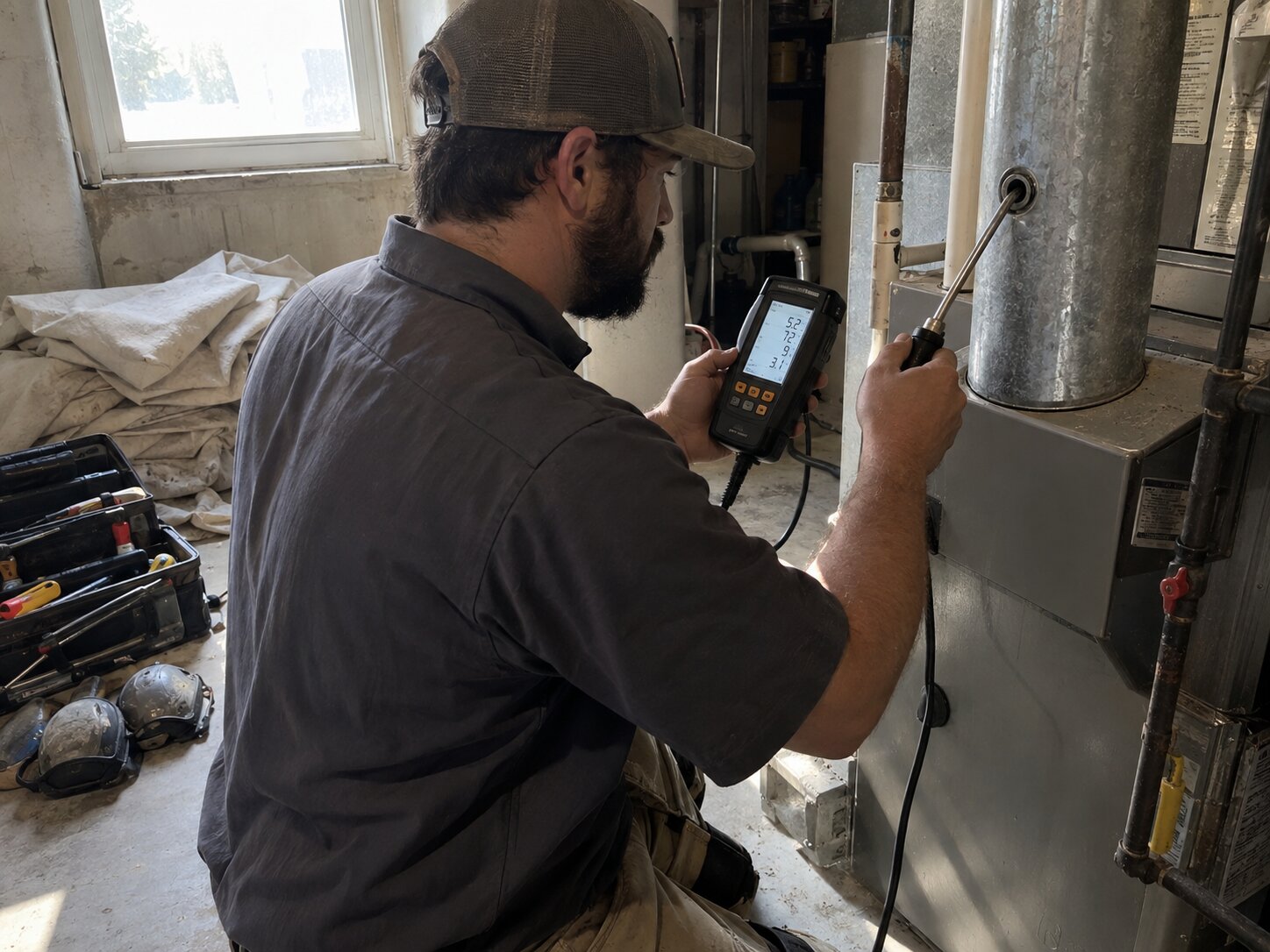
Every furnace repair visit includes a baseline CO check with a calibrated combustion analyzer. We measure CO in supply air at multiple registers, not just at the flue. If we find a CO condition, we shut the furnace down until the source is identified and addressed. Every home with gas appliances should have working CO detectors on every level. The CDC reports more than 400 Americans die annually from accidental CO exposure, with most cases tracing to home gas appliances. See our CO testing page for more.
Repair or Replace?
Several factors push toward replacement:
- Furnace past 18–20 years of service.
- Repair cost approaching a third of replacement cost.
- Cracked heat exchanger confirmed with borescope and analyzer evidence.
- Multiple recent repairs indicating a downward trend.
- An older 70–80% AFUE unit when a 95% replacement would qualify for Section 25C tax credit.
Several factors push toward repair:
- Furnace under 12–15 years old with a single failed component.
- Repair under manufacturer warranty.
- Small fix on otherwise healthy equipment.
Frequently Asked Questions
- How quickly can you respond to a no-heat call in Wilmore?
- Same-day response is typical, with no-heat calls during cold weather receiving priority dispatch. The 18-mile drive south from Lexington along U.S. 68 means we often schedule toward the back half of the day rather than first thing in the morning. During the first sustained cold snap of winter when calls are stacking up, scheduling can be tighter, but we prioritize vulnerable households.
- What does furnace repair cost in Wilmore?
- It depends on the failure. A flame sensor cleaning is among the most affordable repairs. A failed hot surface igniter is similarly inexpensive. A failed inducer motor, gas valve, or control board costs progressively more. A cracked heat exchanger usually pushes toward replacement. We diagnose with measurements before quoting.
- Do you work with landlords on rental property furnace repairs?
- Yes. The rental properties serving the Asbury community require winter heating availability through occupied semesters. We respond to tenant calls with landlord authorization, document the work for landlord records, and discuss equipment lifecycle decisions with landlords directly.
- My furnace is 20+ years old — should I repair or replace?
- At that age, several factors usually push toward replacement: equipment past expected service life, likelihood that other components are headed for failure soon, and the efficiency delta between old 70–80% AFUE and modern 95%+ units. Federal Section 25C tax credit eligibility on qualifying high-efficiency replacements often improves the math meaningfully.
- Do you handle Jessamine County permits for repairs that require them?
- Yes. Furnace repairs in Wilmore that require permits go through Jessamine County rather than LFUCG. We handle the permit application and arrange inspection as part of the work.
Get Heat Back On in Wilmore
When the furnace quits and the house is cooling, you don’t have time for guesswork. Call us. Combustion-tested diagnosis, parts on the truck, honest answers.
- Phone: (859) 215-5241
- Address: 343 Cassidy Ave, Lexington, KY 40502
- Email: [add business email before publishing]