
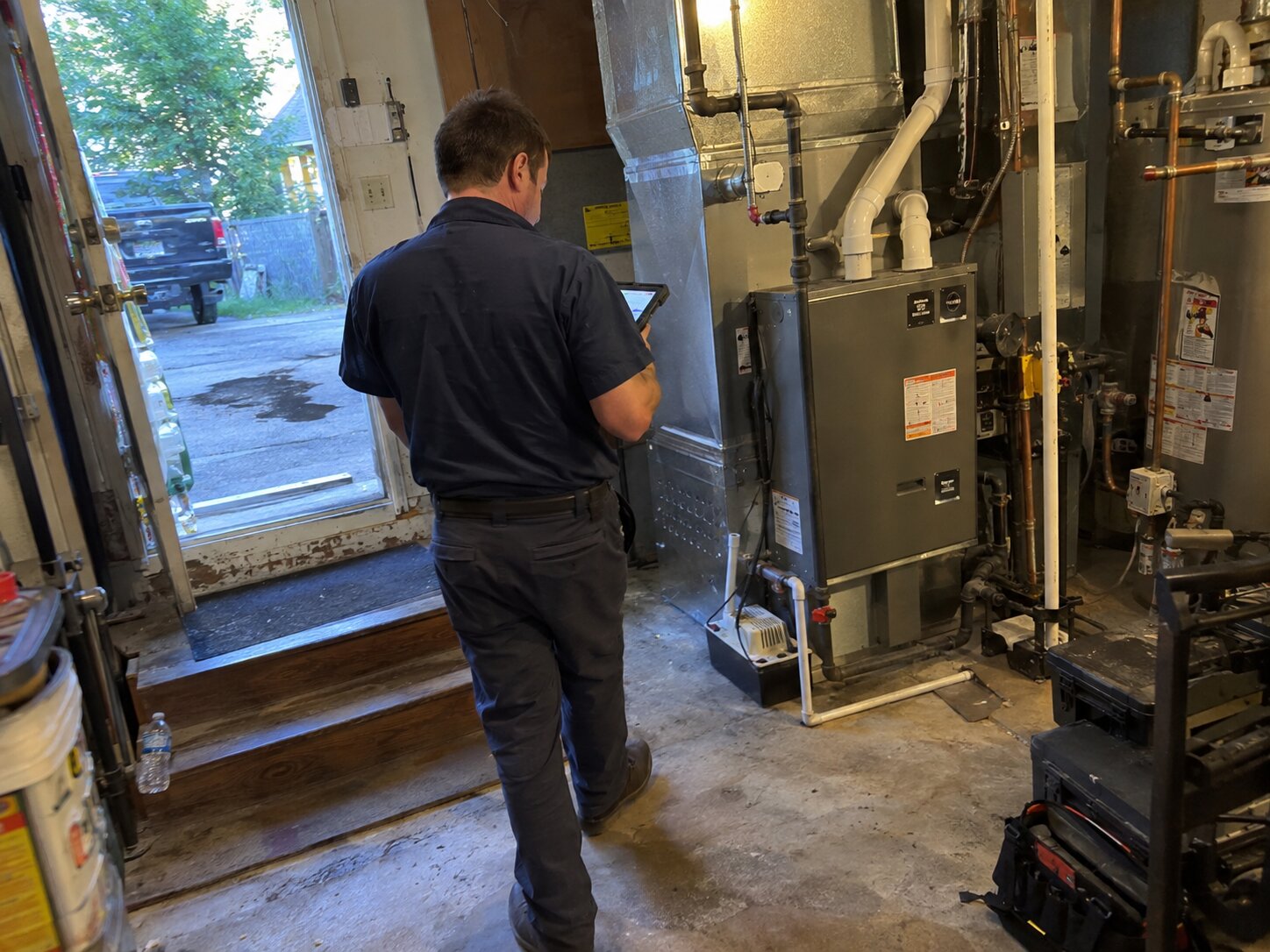
Commercial HVAC Maintenance in Lexington, KY
Commercial HVAC maintenance is not residential maintenance with a bigger invoice. The equipment runs more hours per year, faces tighter uptime requirements, operates under code and refrigerant regulations residential systems don’t face, and serves business operations where unplanned downtime carries direct revenue cost. The maintenance discipline reflects those differences: more frequent service intervals, more comprehensive equipment-specific procedures, refrigerant management documentation where applicable, and the scheduling around business operating hours that residential customers don’t require. Lexington Heating and Air provides commercial HVAC maintenance across Fayette County on the cadence the equipment actually needs — quarterly preventive service for most light commercial RTUs, monthly inspection cycles for high-runtime applications, and the documented service records that satisfy both manufacturer warranty requirements and EPA regulatory compliance.
Why Commercial HVAC Needs More Maintenance Than Residential
Operating Hours
A residential AC in central Kentucky typically runs 1,200–2,000 hours per cooling season. A commercial RTU on a retail store running 7 days a week might run 3,500–4,500 hours; a restaurant’s HVAC system handling kitchen heat loads runs more. More operating hours means more wear on belts, motors, capacitors, and coils — and maintenance intervals have to keep up.
Equipment Complexity
A typical commercial RTU has belt-driven blowers (requiring belt inspection and tensioning), pulleys and bearings (requiring lubrication), economizer dampers and actuators (requiring testing and adjustment), multiple-stage gas heat (requiring combustion analysis at each stage), and outdoor weather exposure (requiring more thorough condenser cleaning). Residential equipment is mechanically simpler.
Refrigerant Management Compliance
EPA refrigerant regulations apply to commercial equipment above specified refrigerant charges (typically 50 pounds), requiring documented leak detection, repair timelines on identified leaks, and recordkeeping that residential systems don’t face. Commercial maintenance has to include the inspection and documentation that compliance requires.
Restaurant and Kitchen Integration
Commercial HVAC that’s integrated with kitchen hood exhaust requires coordinated maintenance — the hood, the makeup air system, and the HVAC have to work together, and maintenance on any one component affects the others. Grease accumulation in exhaust systems, makeup air balance, and HVAC airflow all interact.
Building Code and IAQ Requirements
Commercial buildings have ventilation requirements (ASHRAE 62.1) that residential systems don’t face. Maintenance has to verify outdoor air delivery, demand-controlled ventilation operation, and the demand-controlled ventilation sensors that drive variable outdoor air rates in some installations.
What Commercial Maintenance Covers
Quarterly Inspection (Typical for Most Light Commercial)
- Outdoor unit inspection and cleaning. Condenser coil cleaning (pressure-washed), fan blade and motor inspection, electrical connections, refrigerant line set and insulation.
- Indoor unit inspection. Blower wheel and motor, belt tension and condition (replacement when worn), bearings lubricated where applicable, blower amperage checked against nameplate.
- Coil cleaning. Evaporator coil inspected and cleaned as needed, particularly important in humid Lexington summers where biofilm buildup is rapid.
- Refrigerant system check. Pressures, superheat and subcooling measured against design values; refrigerant levels documented per EPA requirements where applicable.
- Combustion analysis on gas heat. Each heating stage tested with a calibrated combustion analyzer — CO, O₂, flue temperature, efficiency.
- Economizer testing. Outdoor air damper operation, sensor verification, control sequence confirmed.
- Filter replacement. Commercial-grade filters on schedule; high-runtime applications often need monthly filter changes.
- Condensate drainage. Drain pan cleaning, drain line clearing, treatment to prevent biological and mineral buildup.
- Electrical inspection. Contactors, capacitors, motor amperage, control voltage, safety device verification.
- Thermostat and controls. Programming verification, schedule confirmation, integration with building management system if applicable.
- Documentation. Written report with findings, measurements, work performed, and any items requiring follow-up.
Monthly Inspection (High-Runtime Applications)
Some commercial applications — 24-hour operations, restaurants with intensive kitchen loads, medical facilities with strict environmental requirements — warrant monthly inspections focused on filter changes, belt and motor condition, refrigerant verification, and quick-turnaround issue identification. The quarterly comprehensive service still happens; monthly visits supplement it.
Annual Comprehensive Service
Beyond quarterly intervals, commercial equipment benefits from annual deep service: thorough internal cleaning, full electrical testing, refrigerant verification with leak detection per EPA requirements, controls calibration, and full combustion analysis on gas equipment.
Filter Service in Commercial Applications
Commercial HVAC filters get more attention than residential because the consequences of neglect scale up:
- Filter sizes vary widely. Most commercial RTUs use 2-inch or 4-inch pleated filters; some use bag filters; some use multi-stage filtration with prefilters and final filters. Filter selection has to match the equipment’s static pressure tolerance and the building’s IAQ requirements.
- Filter changes are more frequent. Standard 2-inch commercial pleated filters often need monthly or bi-monthly replacement on high-runtime equipment. Higher-MERV filters in restaurants and other high-particulate environments load faster than retail or office equivalents.
- Filter restriction monitoring. Higher-end commercial systems include differential pressure sensors that indicate when filters need changing based on actual airflow restriction rather than calendar intervals. We use these readings when available.
- IAQ implications. Restaurants, medical offices, and other building types with specific IAQ concerns may require MERV 13 or higher filters with the airflow design to support them.
EPA Refrigerant Management Compliance
For commercial systems with refrigerant charges above EPA regulatory thresholds (typically 50 pounds), maintenance includes compliance documentation:
- Annual leak detection inspections with documented results.
- Leak rate calculations when refrigerant is added, with reporting if rates exceed regulatory thresholds.
- Repair timelines on identified leaks, with documentation of repair completion.
- Refrigerant addition records with quantities, types, and dates.
- Final disposition documentation on refrigerant recovered from decommissioned equipment.
Our EPA Section 608 certification covers the refrigerant handling itself; the documentation discipline is part of the maintenance service for systems subject to those requirements.
Maintenance Cadence by Equipment Type
- Light commercial RTUs (3–25 tons): Quarterly preventive maintenance with annual comprehensive service. Monthly filter checks on high-runtime applications.
- Light commercial split systems: Spring and fall tune-ups at minimum; quarterly service in higher-runtime applications.
- VRF systems: Biannual minimum, with manufacturer-specific maintenance for the variable-speed compressor systems.
- Commercial boilers: Annual inspection minimum, with more frequent intervals for systems with high duty cycles or hard water exposure. Combustion analysis is critical.
- Restaurant HVAC with kitchen integration: Quarterly comprehensive plus monthly attention to the hood exhaust and makeup air integration, beyond just the HVAC.
Frequently Asked Questions
- How often does commercial HVAC need maintenance?
- More often than residential. Quarterly preventive maintenance is the typical baseline for most light commercial RTUs. High-runtime applications (24-hour operations, restaurants, medical) sometimes warrant monthly inspection cycles. The right cadence depends on equipment type, operating hours, and building use. We design maintenance programs around the actual equipment and its operating profile.
- What’s included in a commercial HVAC maintenance visit?
- Outdoor and indoor unit inspection, coil cleaning, refrigerant system verification, combustion analysis on gas equipment, economizer testing, filter replacement, condensate drainage service, electrical inspection, and thermostat/controls verification. EPA refrigerant management documentation where applicable. Written report with measurements, findings, and follow-up items.
- Do we need EPA documentation for our refrigerant?
- If your commercial system has refrigerant charge above 50 pounds (typically systems serving larger buildings or higher-capacity applications), yes. EPA regulations require annual leak detection, leak rate calculations on refrigerant additions, repair timelines on identified leaks, and recordkeeping. We provide the documentation as part of maintenance for systems subject to those requirements.
- How does maintenance affect our warranty?
- Manufacturer warranties on commercial HVAC typically require documented preventive maintenance to remain in force. Without the maintenance records, manufacturers can and routinely do deny warranty claims on major component failures. Documented quarterly maintenance is one of the strongest forms of warranty protection for commercial equipment.
- Can maintenance work happen around our business hours?
- For most commercial maintenance, yes. Scheduled inspections and routine work can typically happen during off-hours, early morning, or evenings based on your operating schedule. Some work (rooftop crane scheduling for major service, electrical or gas service modifications) needs daylight hours and may require limited operational disruption. We coordinate scheduling with your business operations.
Set Up a Commercial Maintenance Program
The program starts with a walk-through of the equipment, the operating profile, the uptime stakes, and any EPA compliance requirements that apply. Service intervals get matched to actual equipment runtime — quarterly baseline for most light commercial, monthly supplements where the operation warrants it, annual comprehensive on top. Documentation reaches you in writing so warranty claims and EPA records are ready when needed.
- Phone: (859) 215-5241
- Address: 343 Cassidy Ave, Lexington, KY 40502
- Email: [add business email before publishing]