
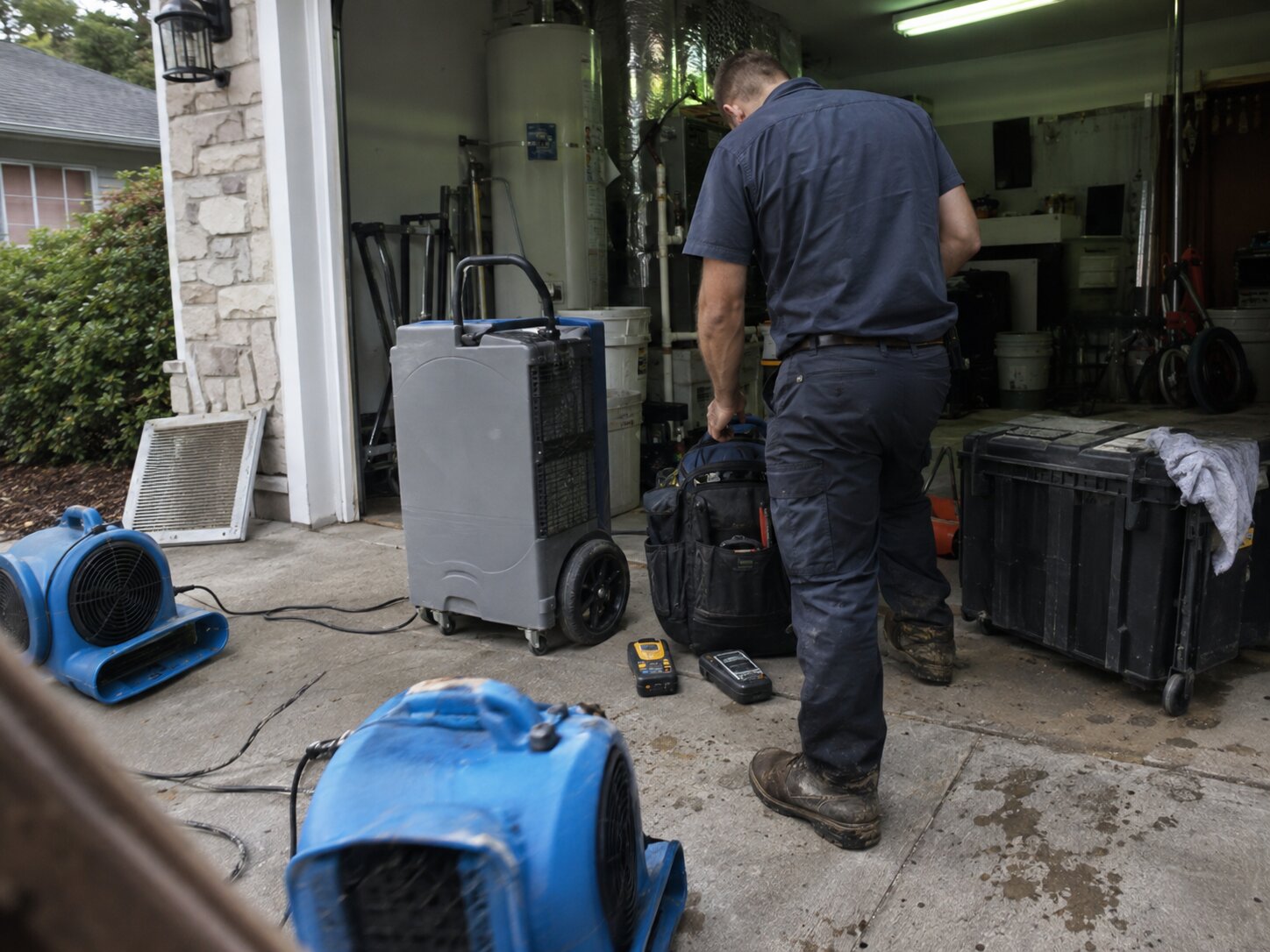
AC Capacitor Replacement in Lexington, KY
Stand outside on a 92°F July afternoon and listen to the condenser. If you hear a faint hum, the contactor click, and then nothing — no fan spin, no compressor start — you have just listened to one of the most common failures in residential air conditioning, and one of the most affordable to fix. A run capacitor that’s lost its capacitance can’t deliver the jolt the motors need to start. The compressor strains, the fan sits still, and the symptom looks far more alarming than the actual problem. Lexington Heating and Air diagnoses and replaces AC capacitors across Fayette County, often the same day, with a meter that confirms the diagnosis before we touch a part.
What a Capacitor Actually Does
Your air conditioner contains two motors with real work to do: the compressor in the outdoor unit and the condenser fan that pulls air across the outdoor coil. Both are induction motors, and both need a strong burst of electrical energy to start and a steady push to keep running. Capacitors store and release that energy on a precisely timed schedule. Most residential systems use a dual run capacitor with two terminals serving both the compressor and the condenser fan, plus sometimes a start capacitor wired through a hard-start kit on systems that need an extra kick. When a capacitor’s stored capacitance drops below its rated value, the motors struggle to start — and a motor that keeps trying to start without enough capacitor support draws excessive locked-rotor amperage, overheats, and can fail. Turning a fourteen-dollar problem into a four-figure one.
Signs of a Failing or Failed AC Capacitor
- Humming but no start. The contactor clicks, the unit hums, and nothing turns. The signature sound of a failed capacitor.
- AC won’t turn on at all. No response to a cooling call from the thermostat.
- Outdoor fan that won’t spin until pushed. If a stick to the fan blade gets it moving and it then runs — that’s a textbook failed start function, and the unit needs to be shut off before further damage is done to the windings.
- Intermittent operation. The system starts sometimes, fails to start other times, often correlating with how recently it last ran.
- Clicking from the outdoor unit. Repeated relay or contactor clicking without successful starts.
- A swollen, leaking, or vented capacitor. Visible on inspection — the top is bulged outward, or there’s oily residue. Unambiguous failure.
- Higher electric bills. A weakening capacitor that’s not yet fully failed forces the motors to draw more current to start, which adds up.
Why Capacitors Fail — and Why Lexington Heat Accelerates It
Capacitors are among the most failure-prone parts in any air conditioner, and heat is the primary mechanism. Electrolytic capacitors degrade through a chemistry process accelerated by temperature: every roughly 18°F increase in operating temperature can cut a capacitor’s expected lifespan in half. Central Kentucky’s long, hot summers mean the outdoor condenser, where the capacitor lives, runs through extended high-temperature stretches with the unit’s own heat layered on top of the ambient. By August, the cabinet interior can be brutal. Add voltage fluctuations on the local grid, power surges from summer storms, and simple age, and capacitor failure becomes one of the most predictable HVAC service calls Lexington Heating and Air handles each summer. We see the pattern every July.
Don’t Keep Running a System With a Failing Capacitor
It can be tempting to nudge a stubborn fan blade or repeatedly reset a system that won’t start. Don’t. A motor straining to start without proper capacitor support draws several times its rated amperage, overheats the windings, and can fail the way an inexpensive capacitor failure was supposed to be preventing. Compressor replacement on an aging system frequently runs into “the capacitor cost me four figures because I kept running it” territory. Catching and replacing a weak capacitor promptly is one of the best ways to protect the much more expensive components around it.
Our Capacitor Replacement Process
- Diagnose with a meter. We test the capacitor with a multimeter set to microfarad measurement, comparing the actual reading to the rated value stamped on the label. A 35-rated dual capacitor reading 32 is fine. One reading 28 is failing and should be replaced before mid-summer. One reading 7 is dead.
- Check the rest of the circuit. If the capacitor failed because of an underlying issue — a sticking contactor sending repeated start attempts, a high-voltage spike from grid issues, a failing motor drawing excess current — we identify it so you’re not back with the same problem.
- Install a correctly rated replacement. Exact microfarad value, exact voltage rating, and the right form factor. Mismatched replacements cause repeat failures.
- Verify. We confirm the system starts cleanly, that motor amperage is within nameplate range, and that the motors the capacitor serves don’t show signs of damage from the prior strain.
Frequently Asked Questions
- How do I know if my AC capacitor is bad?
- Common signs are the system humming but not starting, the outdoor fan not spinning (or only spinning if pushed by hand), intermittent starts, clicking from the outdoor unit without successful operation, or a visibly swollen capacitor. The definitive test is measuring the actual microfarad reading against the rated value stamped on the label, which we do with a meter before replacing anything.
- How much does it cost to replace an AC capacitor?
- A capacitor replacement is one of the most affordable AC repairs — good news when your system won’t start. The exact price depends on the capacitor type (single, dual, or with a hard-start kit) and your system, and we provide a clear quote after confirming the diagnosis. It’s a small fraction of what compressor or fan motor damage costs when a failing capacitor is left running.
- Can I replace an AC capacitor myself?
- We strongly recommend against it. Capacitors store an electrical charge even after the power is off and can deliver a serious shock if mishandled — experienced HVAC technicians use insulated screwdrivers and resistors to discharge them safely. The repair also requires matching exact microfarad and voltage ratings and confirming the motors weren’t damaged by the prior strain. A trained technician handles it safely and verifies the rest of the circuit.
- Why do capacitors fail so often in Lexington?
- Heat is the primary mechanism. Capacitors live in the outdoor condenser, and central Kentucky’s long, hot summers subject them to sustained high temperatures that accelerate the chemistry of degradation — every roughly 18 degrees Fahrenheit of operating temperature can cut a capacitor’s expected lifespan in half. Age, summer storm voltage surges, and grid fluctuations add to it. That’s why capacitor failure is one of the most predictable service calls we see once Lexington’s summer heat sets in.
- Will replacing the capacitor fix my AC?
- If a failed capacitor is the cause, yes — it’s often a quick fix that gets the system running again. But the same symptoms can sometimes point to a contactor issue, a hard-start failure, or a motor problem, which is why we test rather than assume. If the capacitor failed because of an underlying issue, we identify that too so you’re not back with the same problem in a few weeks.
AC Won’t Start? We Can Help Today
A failed capacitor is a common, affordable fix — and we diagnose with a meter so you’re not paying for parts you don’t need. Serving Lexington and Fayette County.
- Phone: (859) 215-5241
- Address: 343 Cassidy Ave, Lexington, KY 40502
- Email: [add business email before publishing]