
Furnace Tune-Up in Lexington, KY
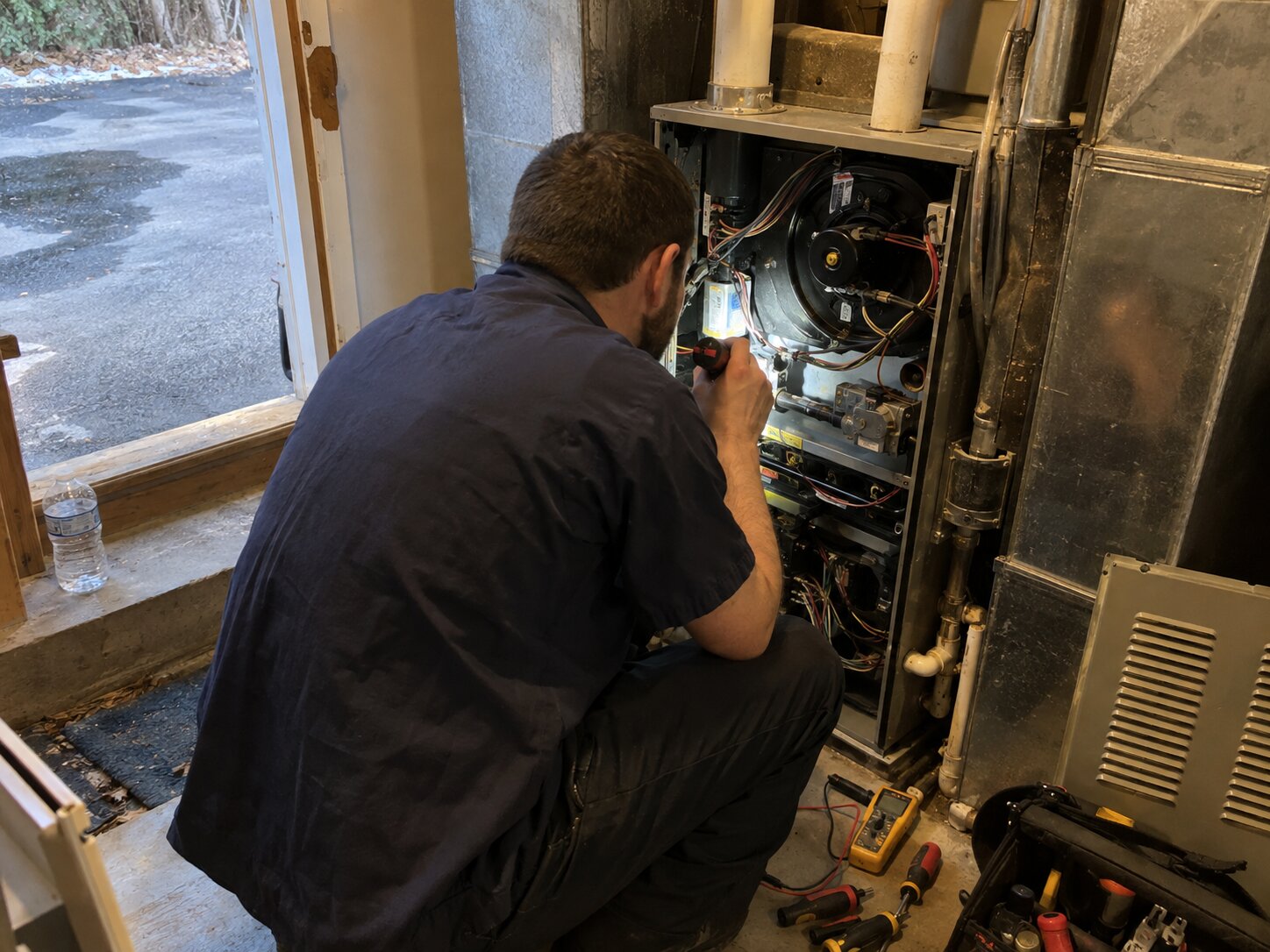
Most no-heat calls in January are problems we could have caught in October. A flame sensor coated with oxidation was readable in fall and unreadable by the third cold snap. A condensate trap that was a little restricted in September was packed solid by Christmas. A capacitor on the inducer motor that measured slightly low at tune-up time failed completely the night the windchill hit 4°F. A furnace tune-up is genuinely the cheapest call we make all year, because it usually prevents the most expensive one. Lexington Heating and Air performs fall furnace tune-ups across Fayette County with a real multi-point checklist, a calibrated combustion analyzer, and the attention to humid-climate buildup and hard-water condensate issues our Bluegrass winters demand.
Why Fall — And Not the First Cold Snap
The standard mistake is waiting until you actually need heat. By the time the first 28°F night hits in November, every HVAC shop in Lexington is booked solid, and the homeowner who deferred a tune-up is now competing with the homeowner whose furnace just quit. Fall tune-ups (September through October is the sweet spot) get the work done while scheduling is open, while a problem found can be repaired before you depend on the equipment, and while parts are in stock rather than back-ordered into December.
There’s a second reason fall matters in central Kentucky specifically. The furnace has been sitting unused since March or April. Insects nest in burner compartments. Spider webs collect across flame sensors. Mice find inducer housings appealing. Condensate traps that dried out have hardened mineral residue inside. The cooling season’s humidity has worked on every metal surface in the cabinet. Starting up cold equipment in cold weather without an inspection is how you find these problems the hard way.
What’s Included in Our Furnace Tune-Up
A real tune-up is a methodical 14-point service, not a 15-minute walk-around. Our checklist:
- Combustion analysis with a calibrated analyzer. Measures CO (parts per million in flue gas, supply-air CO if any concern), O₂, flue temperature, and calculated combustion efficiency. The single most informative test on any gas furnace.
- Flame sensor cleaning. Removes oxidation that builds up over a heating season. This single step is the most common preventive item we perform — the difference between a furnace that ignites cleanly and one that cycles on safety lockout three months from now.
- Hot surface igniter inspection. Visual inspection for cracks, continuity testing with a meter, replacement if reading out of spec.
- Burner cleaning and inspection. Removing accumulated dust and any nesting debris from the burner assembly; verifying flame pattern is correct color and shape.
- Heat exchanger visual inspection. Inspection for cracks, soot, or rust, with a borescope camera when access requires it. We document and show any findings.
- Manifold gas pressure check. Measured against the value stamped on the rating plate; adjusted if drift has occurred.
- Gas leak test. Electronic leak detection at every connection from the appliance shutoff valve through to the burner assembly.
- Inducer motor inspection. Bearings checked for noise, amperage measured against nameplate, capacitor microfarads verified.
- Pressure switch verification. Confirms the switch closes properly when the inducer establishes draft.
- Condensate trap and drain cleaning (on 90%+ AFUE units). The trap, drain line, and condensate pump (if equipped) cleaned and treated to prevent the mid-winter clog that mimics a pressure switch failure.
- Blower assembly inspection. Wheel cleaned if dirty, motor amperage checked, capacitor tested, belts inspected on older belt-drive units.
- Static pressure measurement across the system. Identifies airflow restrictions in the duct system before they shorten equipment life.
- Filter inspection and replacement — or recommendation on the correct filter type for the system if the homeowner is using something that’s restricting airflow.
- Thermostat verification. Calibration check, programming review, low-voltage transformer voltage verified.
[Confirm your exact tune-up checklist and any maintenance-plan pricing before publishing.]
Why AFUE Drifts Down Over Time Without Tuning
A furnace’s measured efficiency degrades over its service life through accumulated small issues, not catastrophic failures. Burner soot from imperfect combustion air mixture reduces flame contact with the heat exchanger surface. A flame sensor that’s slightly compromised may cause the system to short-cycle in ways that waste fuel on ignition warm-ups. Manifold pressure drifts. The inducer fan loses some airflow as dust accumulates. Static pressure climbs as the duct system collects buildup. Each individual issue is small — a percent here, two percent there — but they accumulate. A neglected 95% AFUE furnace can be running closer to 88% by year ten without the homeowner noticing anything beyond a gradually climbing gas bill. A real tune-up restores the system to the rating plate it was sold against.
The Carbon Monoxide Safety Case
This part deserves saying directly. A furnace tune-up is the only routine point in the year when someone with a calibrated combustion analyzer and a borescope looks at your gas appliance and confirms it’s burning cleanly and not introducing carbon monoxide into your home’s supply air. Working CO detectors are the last line of defense, not the first; the first is professional combustion analysis on an annual cadence. Every tune-up we perform includes that analysis. If we find a CO condition, we address it before the system goes back into service.
The Warranty Reason
Manufacturer warranties on gas furnaces typically require documented annual professional maintenance to remain valid. Manufacturers can deny claims on neglected equipment, and the documentation requirement is enforced more strictly than most homeowners realize. A $200 annual tune-up with records you can produce is genuinely the cheapest insurance against a several-thousand-dollar warranty denial later in the equipment’s life.
What Happens If You Skip a Year (or Three)
Equipment usually doesn’t fail dramatically the year you skip tune-ups. More often, neglected systems become incrementally less reliable, year by year, until one of three things happens at the worst possible moment: a January no-heat call (most common); a CO condition that the homeowner discovers via detector or, terrifyingly, via symptoms; or a heat exchanger failure that turns into the conversation about whether the furnace can be saved at all. The cumulative cost of those moments routinely exceeds what five years of tune-ups would have run. We see the pattern every winter.
Frequently Asked Questions
- When is the best time to get a furnace tune-up?
- Fall is ideal — September through October — before Lexington’s first real cold snap. Scheduling is open, parts are in stock if anything needs replacement, and any issue found can be addressed while you’re not yet depending on the heat. Waiting until November means competing with every other homeowner who waited, often during the period when emergency calls are spiking.
- What does a real furnace tune-up actually include?
- A thorough tune-up includes combustion analysis with a calibrated analyzer (CO, O₂, flue temperature, efficiency), flame sensor cleaning, igniter inspection, burner cleaning, heat exchanger visual inspection (often with a borescope), manifold pressure check, gas leak testing, inducer motor inspection, pressure switch verification, condensate trap cleaning on high-efficiency units, blower inspection, static pressure measurement, filter service, and thermostat verification. It’s a methodical 14-point service, not a quick glance.
- Will a tune-up really lower my heating bill?
- It can, often meaningfully. Neglected furnaces drift down in measured efficiency year by year through accumulated small issues — soot on burners, dirty flame sensor causing inefficient cycling, manifold pressure drift, inducer airflow loss, climbing static pressure. A 95% AFUE furnace running at 88% from neglect uses 8% more gas to deliver the same heat. A real tune-up restores the system toward its rating-plate efficiency.
- Can skipping maintenance void my furnace warranty?
- Yes. Manufacturer warranties on gas furnaces typically require documented annual professional maintenance to remain in force. Manufacturers can and do deny claims on neglected equipment, and the documentation requirement is enforced more strictly than most homeowners realize. Annual professional service with records you can produce is the single best protection.
- What’s the biggest thing a tune-up catches that prevents a no-heat call?
- A flame sensor that’s accumulating oxidation. It’s the single most common cause of mid-winter furnace lockouts we see, and it’s almost always invisible without a meter check until the day it stops sending enough signal back to the control board. Catching and cleaning it in October prevents the 11 p.m. call in January. Closely behind: condensate trap clogging on high-efficiency units, which is specifically a hard-water-climate problem and especially common in Lexington.
Schedule a Fall Furnace Tune-Up
September and October scheduling closes faster every year — once the first hard freeze hits, the queue stacks up behind no-heat calls and tune-up appointments get pushed weeks out. Call to claim a slot while the calendar is still open.
- Phone: (859) 215-5241
- Address: 343 Cassidy Ave, Lexington, KY 40502
- Email: [add business email before publishing]