
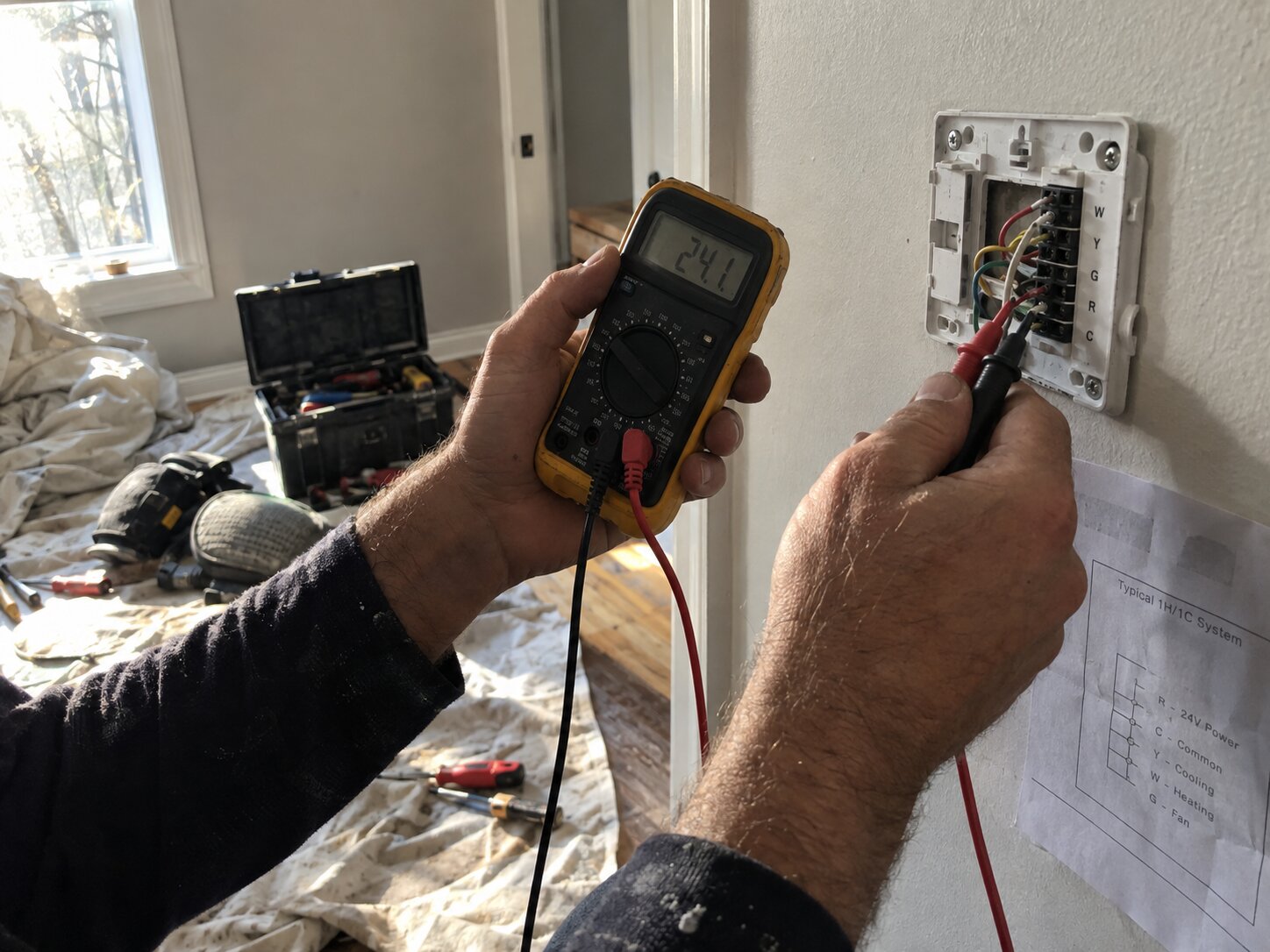
Gas Line Installation in Lexington, KY
Gas piping is not a place to cut corners, save a few dollars, or hire the friend’s neighbor’s cousin who knows how to run pipe. Every gas line in your home carries a flammable fuel under pressure, and the consequences of a leak range from elevated bills (the cheapest mistake) to fire, explosion, asphyxiation, or carbon monoxide poisoning (the rest). Kentucky law requires gas piping installation be performed by a licensed contractor under permit, with proper inspection, for exactly these reasons. Lexington Heating and Air installs and modifies gas lines across Fayette County to current Kentucky mechanical and fuel-gas code — pulled through the LFUCG Division of Building Inspection, pressure-tested before commissioning, and inspected by the gas utility where required. From a new furnace branch to whole-home gas distribution in a renovation, the work is done right.
When You Need Gas Line Work
- New furnace or boiler installation where the existing branch is too small, the wrong location, or doesn’t exist. Modern higher-capacity equipment sometimes needs a larger branch than the legacy line provided.
- Switching from electric to gas — running new piping for a gas furnace, gas water heater, or gas range during a remodel or upgrade.
- Adding a gas appliance — gas dryer, range, fireplace, outdoor grill, pool heater, or generator. Each requires properly sized branch piping from the home’s gas main.
- Whole-home re-piping in older Lexington homes where the existing gas distribution is undersized for current loads, uses now-obsolete materials, or shows signs of corrosion at fittings.
- Service relocation when a basement remodel, kitchen rebuild, or addition requires moving gas piping to accommodate the new layout.
- Repair or replacement of corroded fittings, leaking joints, or visible damage to existing piping — safety work that should not wait.
What Gas Line Installation Involves (Done Correctly)
Sizing the Pipe
This is where mistakes start. Gas piping has to be sized for the cumulative demand of every appliance downstream of any given section, with sizing tables based on pipe length, pressure drop allowed, and the BTU input of all served appliances. An undersized branch creates pressure starvation that shows up as a furnace failing to fire reliably, a water heater that can’t recover, or a range whose burners run yellow instead of blue. The math is in the IFGC (International Fuel Gas Code) sizing tables, and getting it right matters.
Material Selection
- Black iron pipe. The traditional and still common choice, screwed-threaded carbon steel pipe with pipe-dope joint compound. Strong, durable, requires no special protection. Most visible gas piping in older Lexington homes.
- CSST (Corrugated Stainless Steel Tubing). Flexible stainless steel tubing protected by a yellow or black PE jacket. Faster to install than threaded black iron, especially in long runs and tight spaces, but requires proper bonding to building electrical ground per code (CSST is at elevated risk of lightning-strike damage if not properly bonded). Modern installations frequently use CSST for runs from a manifold to appliances, with rigid black iron at appliance connections and exterior penetrations.
- Polyethylene (PE). Used for buried underground gas piping from a utility meter or for outdoor appliances. Cannot be used above grade or indoors.
- Schedule 40 steel. Heavier-wall steel pipe sometimes specified for commercial or higher-pressure applications.
Joints, Fittings, and Sealing
Threaded joints are sealed with gas-rated pipe joint compound applied to male threads, not Teflon tape unless it’s specifically gas-rated yellow tape. CSST uses purpose-made fittings; flares and compression fittings are not interchangeable. Every joint is leak-tested at appropriate pressure before the line is put into service.
Bonding and Electrical Considerations
CSST in particular requires direct bonding to the building’s grounding electrode system, with a specific bonding clamp at a defined location. This isn’t optional — it addresses a documented lightning-related failure pattern in CSST that emerged after early installations. We install bonding correctly because the alternative is a real safety risk for the home.
Pressure Testing
Before any new or modified gas piping is put into service, we pressure-test it — typically with compressed air or inert gas at a pressure higher than operating pressure, held for a defined period with a gauge monitored for any drop. A passing test confirms the system is leak-tight before it ever carries gas. This is code-required and we do it on every job, not just the big ones.
Permits and Inspection
Gas piping work in Lexington requires permits through the LFUCG Division of Building Inspection. We pull the permit, complete the work to code, and arrange the required inspection before the system is commissioned. Unpermitted gas work is illegal, can void homeowner’s insurance, and will surface as a finding at home inspection — an expensive problem to discover at sale.
Common Gas Line Installation Projects
- New high-efficiency furnace branch. A 95% AFUE condensing furnace sometimes needs a larger gas branch than the older 70% AFUE unit it replaces, particularly if the run from the meter is long.
- Gas range or cooktop installation. Running a branch to the kitchen, sized for typical 65,000–100,000 BTU range input.
- Outdoor gas grill connection. A permanent gas line eliminates the propane-tank-swap cycle, sized for the grill’s BTU input plus future side burners.
- Gas fireplace insert. Branch and shutoff valve installed for new or upgraded gas fireplace.
- Tankless water heater conversion. Tankless units often require larger gas branches than tank-style units due to their high peak BTU demand (200,000–300,000 BTU vs. typical 40,000–50,000 BTU for a tank).
- Standby generator hookup. Branch from the gas main to a permanently installed standby generator, sized for the generator’s full-load input.
- Pool or spa heater connection. Higher-BTU branch lines for pool heaters that can demand 250,000–400,000 BTU.
Safety: What to Do If You Smell Gas
Natural gas is naturally odorless. The smell most people associate with gas leaks is mercaptan, an additive specifically blended into the gas supply for this reason. If you smell gas:
- Do not flip light switches, use electrical outlets, or operate phones in the affected area — any spark can ignite gas.
- Leave the building, taking household members with you.
- From a safe distance, call 911 or your gas utility’s emergency line.
- Do not return until authorities or the utility confirm it’s safe.
- Once safe, call us at (859) 215-5241 to diagnose and repair the source.
Frequently Asked Questions
- Can I install my own gas line?
- No. Kentucky law requires gas piping work be performed by a licensed contractor under permit. Beyond the legal requirement, the safety reasons are real: undetected gas leaks can cause explosions, fires, asphyxiation, or carbon monoxide poisoning. Improperly sized lines cause appliance malfunction. Improperly bonded CSST is a documented lightning risk. The work isn’t a DIY project.
- What’s the difference between black iron pipe and CSST?
- Black iron is traditional threaded carbon steel pipe, sealed with gas-rated joint compound. Strong, durable, well-understood. CSST (Corrugated Stainless Steel Tubing) is flexible stainless steel with a protective yellow or black jacket, faster to install in long runs and tight spaces. CSST requires direct bonding to the building’s electrical ground to prevent lightning-related failure. Both are code-compliant when installed correctly.
- Do I need a permit for gas line work?
- Yes. Gas piping work in Lexington requires a permit through the LFUCG Division of Building Inspection, with required inspection before the system is commissioned. We handle the permit and inspection as part of the job. Unpermitted gas work can void your homeowner’s insurance and will surface as a finding at home sale.
- How much does gas line installation cost?
- It depends on the length of the run, the size of pipe required for the load, the materials used (black iron vs. CSST), how much access is available (open basement runs are cheaper than fishing through finished walls), and any required pressure testing or appliance shutoff valves. We measure the job, calculate the sizing, and provide a clear itemized estimate before any work begins.
- What do I do if I smell gas?
- Leave the building immediately, taking everyone with you. Don’t flip light switches, use phones, or operate any electrical device in the affected area, anything that creates a spark can ignite gas. From a safe distance, call 911 or your gas utility’s emergency line. Don’t return until authorities or the utility confirm it’s safe. Then call us to diagnose and repair the source.
Get Gas Piping Done Right in Lexington
From a new furnace branch to whole-home gas distribution, we install gas lines to code, pull permits, pressure-test before service, and stand behind the work. Across Lexington and Fayette County.
- Phone: (859) 215-5241
- Address: 343 Cassidy Ave, Lexington, KY 40502
- Email: [add business email before publishing]