
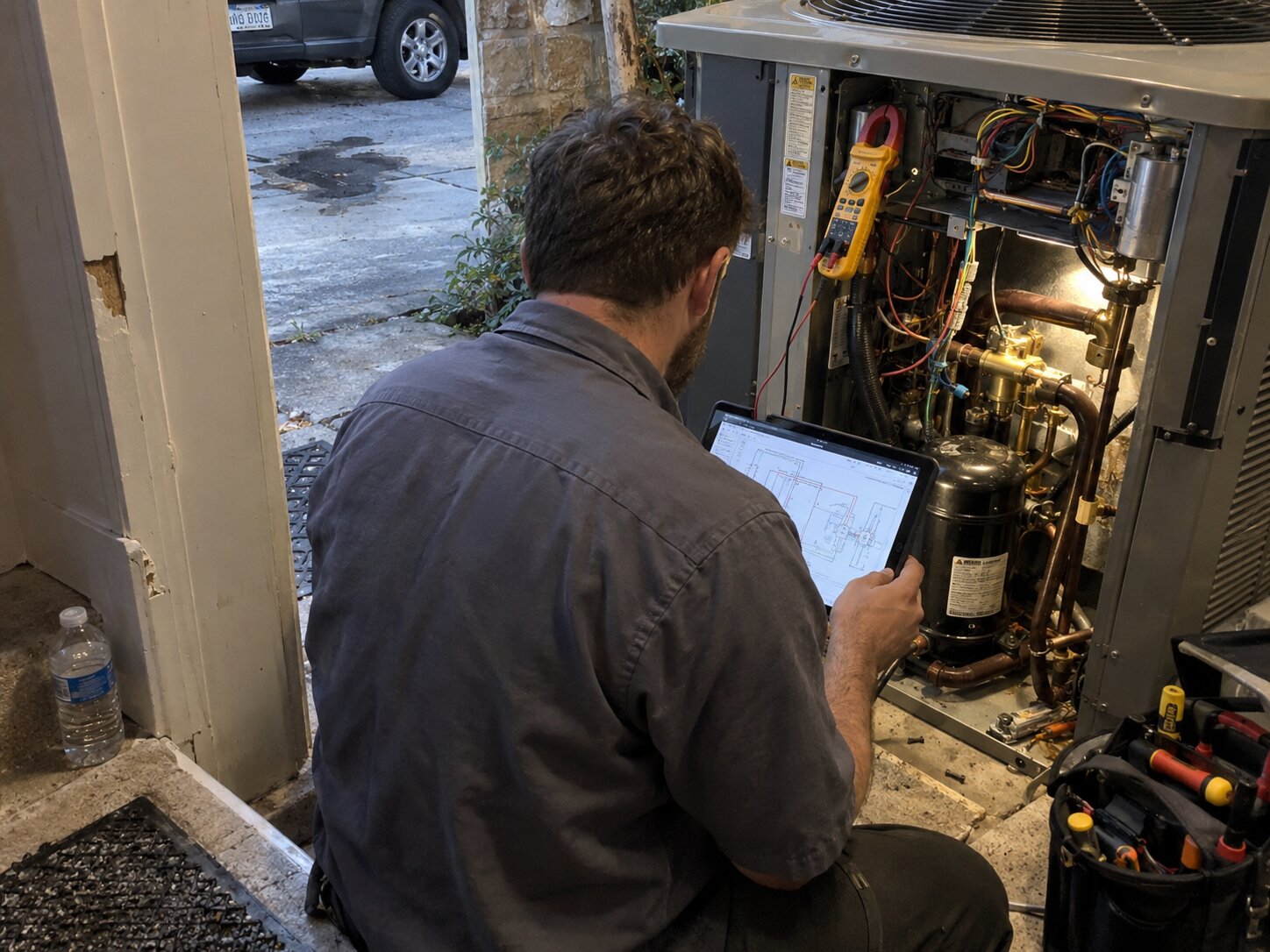
Heat Pumps in Lexington, KY
A heat pump is one device that does the job of two — cooling your home in summer and heating it in winter using the same vapor-compression cycle, just run in reverse during the cold months. For decades, heat pumps were considered a Southern technology that struggled below about 35°F. Modern equipment has changed that picture substantially. Cold-climate heat pumps can deliver meaningful capacity at outdoor temperatures down to 0°F and below, and Lexington’s Climate Zone 4A — mixed-humid, with winter design temperatures in the 6–10°F range — is genuinely well-suited to them. Federal Section 25C tax credits and utility incentives have made the economics meaningfully better as well. Lexington Heating and Air installs and services heat pumps across Fayette County, sized honestly for our actual winter conditions rather than for the optimistic mild-day rating stamped on the box.
How a Heat Pump Heats When It’s Cold Outside
This is the part that confuses most homeowners, so it’s worth a moment. A heat pump doesn’t generate heat the way a gas furnace does (by burning fuel) or the way electric resistance does (by passing current through a heating element). It moves heat. Even air that feels cold to you still contains thermal energy that can be extracted — air at 20°F contains substantially more heat energy than air at 0°F, which contains more than air at −40°F, and so on. The heat pump uses refrigerant to capture that heat outside, compress it (which raises its temperature), and release it indoors. In summer, the cycle reverses and the same machine moves heat from indoors to outdoors. One refrigerant loop, one compressor, two seasons.
The efficiency math is striking. A high-efficiency gas furnace converts about 95% of the energy in its fuel to heat. A heat pump can deliver 250–400% of the electrical energy it consumes as heat — not because it’s violating thermodynamics, but because most of the heat it delivers came from outside, free, and the electricity only ran the pump that moved it. This ratio (called Coefficient of Performance, or COP) falls as outdoor temperatures drop, which is why heat pump sizing for the actual winter design temperature matters more than the rating-plate number suggests.
Types of Heat Pumps
- Standard air-source heat pumps. The most common configuration: an outdoor unit (much like an AC condenser) connected to an indoor air handler by a refrigerant line set. Good performance down to about 20°F before capacity drops meaningfully; typically paired with electric resistance auxiliary (“emergency”) heat for the coldest days.
- Cold-climate (or “low-ambient”) air-source heat pumps. Use variable-speed inverter-driven compressors and refrigerant control optimized for low temperatures. Modern cold-climate models (Mitsubishi Hyper-Heat, Bosch IDS, Carrier Infinity Greenspeed, and others) maintain 100% rated capacity down to 5°F and substantial capacity below 0°F. The right choice for Lexington homes where backup heat usage should be minimal.
- Dual-fuel (“hybrid”) systems. Pair a heat pump with a gas furnace as the backup, switching to gas when outdoor temperatures drop below the heat pump’s economic crossover point. Often the most cost-effective configuration for homes with existing gas service.
- Ductless mini-splits. Heat pumps without ductwork, with one or more indoor heads. Excellent for additions, finished basements, garages, and homes without existing ducts. See our ductless mini-splits page for more.
- Geothermal (ground-source) heat pumps. Extract heat from the relatively stable temperature of the ground rather than outdoor air. Highest efficiency, highest first cost, requires ground-loop installation. A specialty application; we can discuss whether it makes sense for your situation.
Why Lexington Is a Good Heat Pump Climate
- Climate Zone 4A — the heat-pump sweet spot. Cold enough to need real heating, mild enough that even non-cold-climate heat pumps cover most of the season without help, humid enough that the cooling side of the equation does real work too.
- Winter design temperature in the 6–10°F range. Cold, but not extreme. Modern cold-climate heat pumps cover this easily; standard models handle it with backup heat.
- Long shoulder seasons. March through May and September through November are when heat pumps shine — mild outdoor temperatures mean very high COP and very efficient operation.
- Substantial cooling load. Bluegrass humidity means cooling demand is real; pairing one device with year-round duty rather than running a furnace four months and an AC five months has economic appeal.
- Federal Section 25C tax credit. Qualifying heat pumps may be eligible for federal tax credits, improving the economics meaningfully. Confirm specific eligibility with a tax professional.
Sizing a Heat Pump for Lexington Winters — The Critical Detail
This is where most heat pump installations go wrong. A heat pump’s heating capacity is highest at moderate outdoor temperatures and falls as it gets colder. The rating-plate capacity (typically measured at 47°F outdoor) substantially overstates what the unit will deliver on the coldest night of the year. A 36,000 BTU heat pump rated at 47°F may deliver only 22,000 BTU at 5°F — and if your home needs 38,000 BTU at the design temperature, you have a problem.
The right approach is sizing based on capacity at the design temperature, not at the rating temperature. We use Manual J to calculate the actual heat load at Lexington’s winter design temperature, then select equipment whose capacity at that temperature matches the load. We size the auxiliary heat (electric resistance or gas backup) to cover the gap on the rare coldest days. The result: a system that runs efficiently for the large majority of the heating season on the heat pump alone, with backup heat coming on only when it actually needs to.
Heat Pump Services We Provide
- New installation. Manual J sizing for actual winter design temperature, Manual S equipment selection weighted for cold-weather capacity, Manual D duct verification, refrigerant line set commissioning, integration with auxiliary heat, LFUCG permits where required.
- Replacement of an aging system. Including conversion from gas furnace + AC to a single heat pump system where it makes sense.
- Repair. Diagnosis and repair of heat pumps from any manufacturer, including the failure modes specific to heat pumps (reversing valve issues, defrost cycle problems, auxiliary heat staging faults).
- Maintenance. Twice-yearly service is recommended since the system runs year-round — spring cooling tune-up, fall heating tune-up.
- Refrigerant service. EPA Section 608 certified handling of R-410A and R-454B (the new lower-GWP refrigerant standard for 2025+ equipment).
Frequently Asked Questions
- Will a heat pump actually heat my Lexington home in January?
- Yes, when properly sized for Lexington’s winter design temperature (typically 6 to 10 degrees Fahrenheit in central Kentucky) rather than for the optimistic rating-plate temperature. Cold-climate heat pumps maintain meaningful capacity well below 0 degrees Fahrenheit, and standard heat pumps cover the majority of our heating season unaided with auxiliary heat available for the coldest days. Sizing is everything.
- What’s the difference between a standard and cold-climate heat pump?
- Cold-climate heat pumps use variable-speed inverter-driven compressors and refrigerant control optimized for low outdoor temperatures. They maintain rated heating capacity down to 5 degrees Fahrenheit and continue delivering meaningful capacity well below zero, whereas standard heat pumps lose capacity faster as temperatures drop and rely more on auxiliary heat. Cold-climate models cost more upfront, but the running-cost difference in Lexington’s climate often justifies it over the equipment’s life.
- Should I get a heat pump or a furnace?
- It depends on your home, your existing equipment, your electric and gas rates, and your timeline. A heat pump is one piece of equipment handling both seasons (efficient, especially with Section 25C credit eligibility). A gas furnace plus AC is two pieces of equipment, but gas heat is often less expensive per BTU delivered than electric resistance backup. A dual-fuel system that uses a heat pump above the crossover temperature and gas below is often the most cost-effective for homes with existing gas service. We walk through the math for your specific situation.
- Do heat pumps qualify for tax credits or rebates?
- Many do. The federal Section 25C Energy Efficient Home Improvement Credit applies to qualifying heat pumps installed in your principal residence, subject to IRS rules, equipment requirements, and annual limits. Some utility incentives may also apply. Confirm specific tax credit eligibility with a tax professional, not your HVAC contractor.
- How long do heat pumps last in Lexington?
- Roughly 12 to 15 years for the equipment itself, with regular maintenance, in our climate. Heat pumps run year-round (rather than seasonally like a furnace or AC), so the total hours of operation per year are higher, but the workload is also distributed across both heating and cooling rather than concentrated in one season. Twice-yearly professional maintenance (spring and fall) is the key to reaching the high end of that range.
Talk to Us About a Heat Pump for Your Lexington Home
From a single-zone system to a whole-home replacement with backup heat, our licensed team can size, install, and service a heat pump that fits your home, your budget, and our climate. Across Lexington and Fayette County.
- Phone: (859) 215-5241
- Address: 343 Cassidy Ave, Lexington, KY 40502
- Email: [add business email before publishing]