
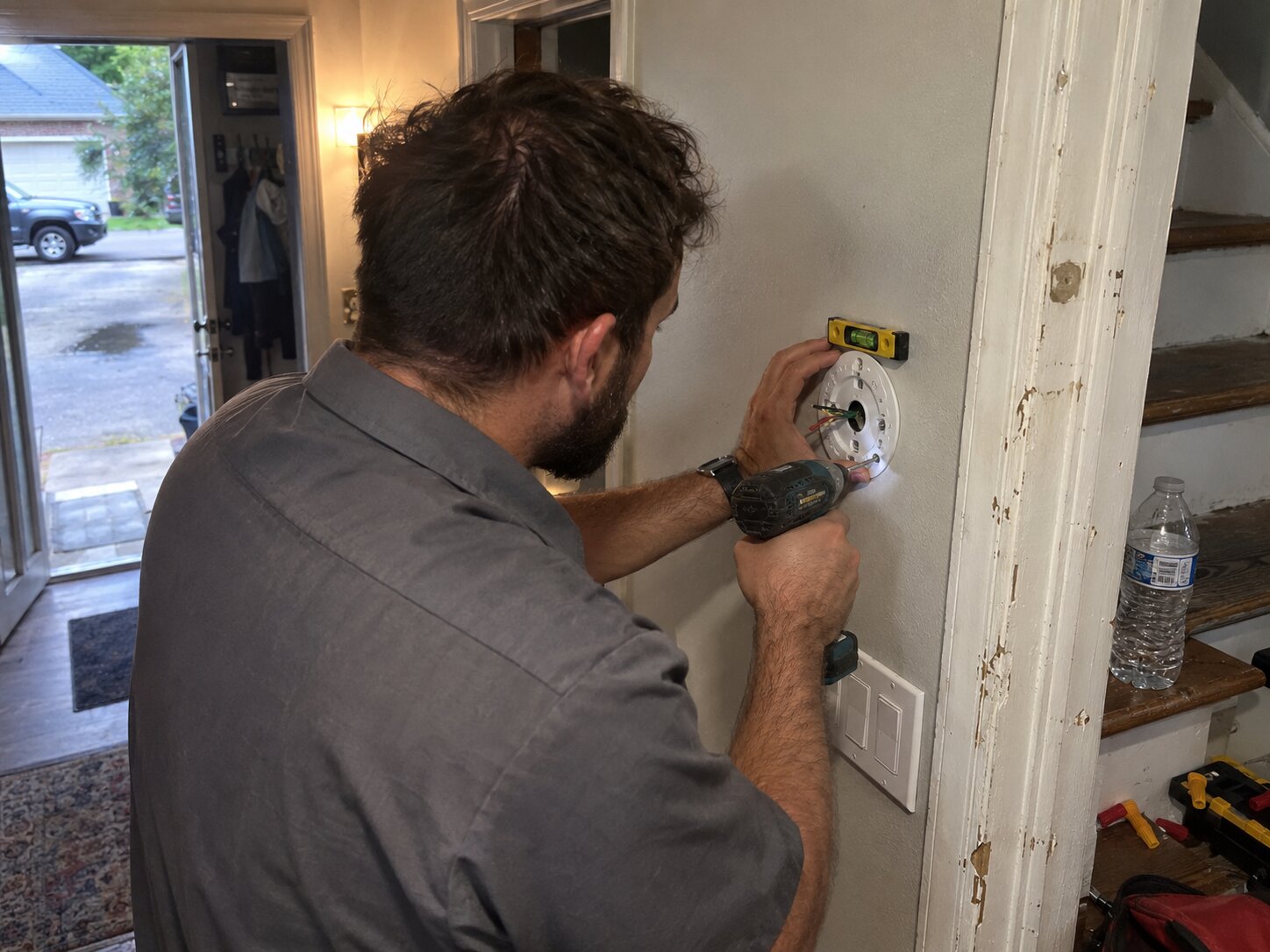
Thermostat Repair in Lexington, KY
A surprising fraction of “my HVAC system isn’t working” calls turn out to be thermostat problems rather than equipment problems. A loose wire at the C-terminal, a depleted battery in a smart thermostat, a tripped breaker on the furnace circuit that the homeowner mistook for a system failure, a calibration drift that makes the home read 4°F off, a Wi-Fi outage that left the smart thermostat unable to respond to schedule changes. Each of these can stop heating or cooling completely, mimic equipment failure in alarming ways, and lead to expensive service calls when the actual fix is simple. Lexington Heating and Air repairs thermostats across Fayette County the way the work should be done — diagnose the thermostat before assuming the equipment, fix the simple problem when that’s what it is, and address the actual equipment issue when the thermostat is innocent.
Common Thermostat Problems We Diagnose
Dead or Blank Display
Sometimes the thermostat itself, sometimes something else. Causes include depleted batteries on battery-powered thermostats, blown low-voltage transformer (the small 24V transformer that powers the thermostat circuit), tripped breaker on the furnace primary side that cuts power to the transformer, loose or disconnected wire at the thermostat or the equipment, and the float switch on the HVAC condensate drain that intentionally cuts power when the drain backs up. Diagnostic order: check thermostat batteries first, breaker second, then move to the equipment-side wiring.
Heating or Cooling Won’t Turn On
The thermostat shows correctly but the equipment doesn’t respond. Common causes: wrong setting (cooling mode in winter, or vice versa — surprisingly common), thermostat call wires disconnected at the furnace, failed thermostat output relay, or a system-side problem the thermostat is correctly trying to signal but the equipment isn’t responding to.
System Runs Constantly
The opposite problem: the equipment runs without satisfying the thermostat. Often a stuck thermostat call, a short in the thermostat wiring, an incorrectly programmed schedule with conflicting setpoints, or a thermostat reading temperature incorrectly (calibration drift, or the thermostat mounted on an exterior wall or in direct sunlight).
Wrong Temperature Reading
The thermostat reads 72 but the room is clearly 76. Causes include calibration drift (older thermostats develop this), heat sources near the thermostat (a lamp, electronics, sun through a window), location problems (mounted on an uninsulated exterior wall), or simply a failed temperature sensor in the thermostat itself.
Smart Thermostat Connectivity Issues
A modern set of failure modes: Wi-Fi disconnected after a router replacement, app not communicating with the thermostat, schedule not loading correctly after a firmware update, geofencing failing because the homeowner changed phones. Most of these are configuration issues we can resolve, sometimes with manufacturer support involvement.
Short-Cycling or Erratic Behavior
The HVAC system cycles on for a minute, off for a minute, on again. The thermostat might be the cause (a stuck contact, an anticipator problem on older units, a configuration issue on a smart thermostat) or it might be a victim of equipment problems — high-limit trips on the furnace, frozen coil on the AC. We diagnose which.
C-Wire Power Issues on Smart Thermostats
Smart thermostats installed without a proper C-wire, using battery power or power-stealing schemes, often develop intermittent symptoms: random resets, screen blanking, Wi-Fi dropping, schedule glitches. The fix is usually a proper C-wire installation, not chasing the symptoms.
Mercury Switch Failures
Older thermostats — pre-1995 in many cases, still common in homes that haven’t replaced theirs — use mercury tilt switches for control. These can stick, lose calibration, or eventually fail. Replacement with a modern programmable or smart thermostat is usually the right answer, with proper mercury disposal of the old unit (mercury is a hazardous material).
Why Thermostat Problems Are Often Misdiagnosed
The thermostat is small, the equipment is large and visible, and the natural human assumption when something stops working is that the big complex thing failed rather than the small simple thing. A homeowner who hears “my furnace won’t run” usually assumes the furnace itself is broken. A contractor who responds to that call without first checking the thermostat can end up replacing parts that don’t need replacing while missing the actual fault.
Our diagnostic approach reverses the natural assumption: we verify the thermostat is working correctly first, then move to the equipment. If the equipment isn’t receiving a call from the thermostat, no amount of work on the equipment will fix the problem. The five minutes spent verifying thermostat output saves the hour spent diagnosing equipment that’s actually fine.
When to Repair vs. Replace a Thermostat
Thermostats are inexpensive enough that replacement often makes more sense than repair. Specific situations:
- Repair makes sense when the problem is wiring (C-wire pull, loose connection, wire damage in the wall), a transformer failure (the issue is upstream of the thermostat), a configuration issue on a working thermostat, or a smart-thermostat Wi-Fi or app problem. The thermostat itself is fine.
- Replacement makes sense when the thermostat is genuinely failed (mercury switch sticking, internal relay welded, calibration drift past usable range), when the thermostat is decades old and lacks programming features that would save money, or when an upgrade to a smart thermostat is desired anyway.
Frequently Asked Questions
- Why is my thermostat screen blank?
- The most common causes are depleted batteries on battery-powered thermostats, a tripped breaker on the furnace primary side that cut power to the low-voltage transformer, a blown transformer itself, or a tripped condensate drain float switch on a high-efficiency HVAC unit. Check the batteries first, the breaker second, then call us if the display still doesn’t come back.
- Is my problem the thermostat or the HVAC equipment?
- Hard to know without diagnosis, but the diagnostic order matters. If the thermostat doesn’t display correctly, the issue might be upstream of the equipment (transformer, breaker, wiring). If the thermostat displays correctly and is calling for heating or cooling but the equipment isn’t responding, the problem has moved to the equipment side. We diagnose in that order to avoid expensive equipment work when the thermostat is the real issue.
- Can a thermostat cause my HVAC system to fail?
- Cause failure, no — the thermostat is a controller, not a power supply for the equipment. Cause apparent failure, yes: a stuck call from a failed thermostat can run equipment continuously, masking what looks like equipment issues. A thermostat reading temperature incorrectly can cause comfort complaints that lead to the wrong equipment changes. Thermostat problems show up as equipment-shaped problems more often than people realize.
- How long do thermostats typically last?
- Mechanical mercury-switch thermostats from the 1980s and 1990s can last decades; we still see them functioning in older Lexington homes. Modern digital programmable thermostats typically last 10 to 15 years before features become obsolete or components fail. Smart thermostats have shorter expected lifetimes (often 5 to 10 years) before manufacturer support ends or compatibility issues with home networks emerge.
- Will replacing my old thermostat save money?
- If your existing thermostat is an old non-programmable model and your household has setback opportunities you’re not currently using, yes — the Energy Star estimate is 8 to 15 percent savings on heating and cooling when a smart thermostat is properly programmed. If your existing thermostat is already programmable and properly used, the savings from an upgrade are smaller.
Get Your Thermostat Diagnosed
Before assuming your HVAC system has failed, get the thermostat checked. Often the fix is simple, fast, and far less expensive than what you feared. Across Lexington and Fayette County.
- Phone: (859) 215-5241
- Address: 343 Cassidy Ave, Lexington, KY 40502
- Email: [add business email before publishing]