
Duct Cleaning in Lexington, KY
Duct cleaning is one of the most marketed and most over-promised services in HVAC. Television ads, mailers, and door-knockers offer “whole-home duct cleaning for $89” and imply it will solve allergies, asthma, dust accumulation, and a list of other problems. The truth is more nuanced. The EPA’s official position, summarized fairly, is that duct cleaning has not been shown to actually prevent health problems in most cases — but it can be genuinely worthwhile in specific situations where ducts are visibly contaminated, where there’s biological growth, where construction debris is present, or after rodent or pest infestation. The National Air Duct Cleaners Association (NADCA) publishes standards that distinguish proper cleaning from the cosmetic kind. Lexington Heating and Air provides duct cleaning across Fayette County to the NADCA standard when the assessment says it will help — and tells you honestly when it won’t.
When Duct Cleaning Actually Helps
Specific situations where duct cleaning makes real difference, not marketing difference:
- Visible contamination. Substantial visible dust, debris, or particulate buildup observable in supply registers, return grilles, or accessible duct interiors. Not a thin film — the kind of buildup that’s been accumulating for decades, common in older Lexington homes whose ductwork has never been serviced.
- Biological growth. Visible mold or biofilm in the duct system, often associated with prior water damage, condensation problems, or a chronically wet evaporator coil that’s contaminated downstream surfaces. The EPA recognizes mold remediation in HVAC systems as a legitimate cleaning need.
- Rodent or pest contamination. Evidence of mice, squirrels, insects, or their droppings in the duct system. Genuinely a health concern and a clear indication for thorough cleaning and source elimination.
- Post-construction or renovation cleanup. Drywall dust, sawdust, and construction debris that ended up in the ducts during a remodel. Especially common when new work was done without sealing the HVAC system off from the construction zone.
- After a major event. Smoke or soot infiltration from a fire, flooding that affected the ducts, or significant pest activity that left material behind. These create real contamination that proper cleaning addresses.
- New homeowner moving in. If the previous occupants smoked indoors, had multiple pets, or had visible IAQ issues you don’t know the history of, baseline cleaning before you move in is a defensible choice.
- Persistent odors that aren’t traceable to other sources and seem to come through the supply registers.
When Duct Cleaning Probably Won’t Help
Equally important to know:
- Dusty house with no visible duct contamination. Most household dust originates from skin cells, textiles, paper, pet dander, and outdoor infiltration — not from the ducts. Cleaning the ducts often doesn’t change observable dust levels.
- Allergy symptoms with no other indicators. Unless the ducts themselves harbor allergens (mold, rodent debris), cleaning them rarely improves allergy symptoms meaningfully. The EPA notes that no studies have conclusively shown duct cleaning prevents health problems.
- General “preventive” cleaning every few years. No basis in the evidence. The EPA does not recommend routine duct cleaning the way it recommends filter changes or annual HVAC service.
- Ducts that are simply old. Age alone isn’t an indication. Old ductwork in a well-maintained system can be perfectly clean inside; new ductwork can be contaminated if conditions allowed it.
If a contractor pressures you toward duct cleaning without an actual visual assessment, they’re selling the service, not solving a problem. We do not work that way.
Our Duct Cleaning Process
When duct cleaning is genuinely indicated, the work should follow NADCA standards — the industry’s recognized procedural framework. Cutting corners on the process is how the service got its bad reputation.
- Inspection first. We open and inspect the duct system to assess what’s actually there — visual inspection, camera if appropriate, sampling if biological growth is suspected. The findings determine whether cleaning is warranted and what scope of work makes sense.
- HVAC system shutdown and containment. The system is turned off and registers are sealed except for the access point and the negative-pressure connection.
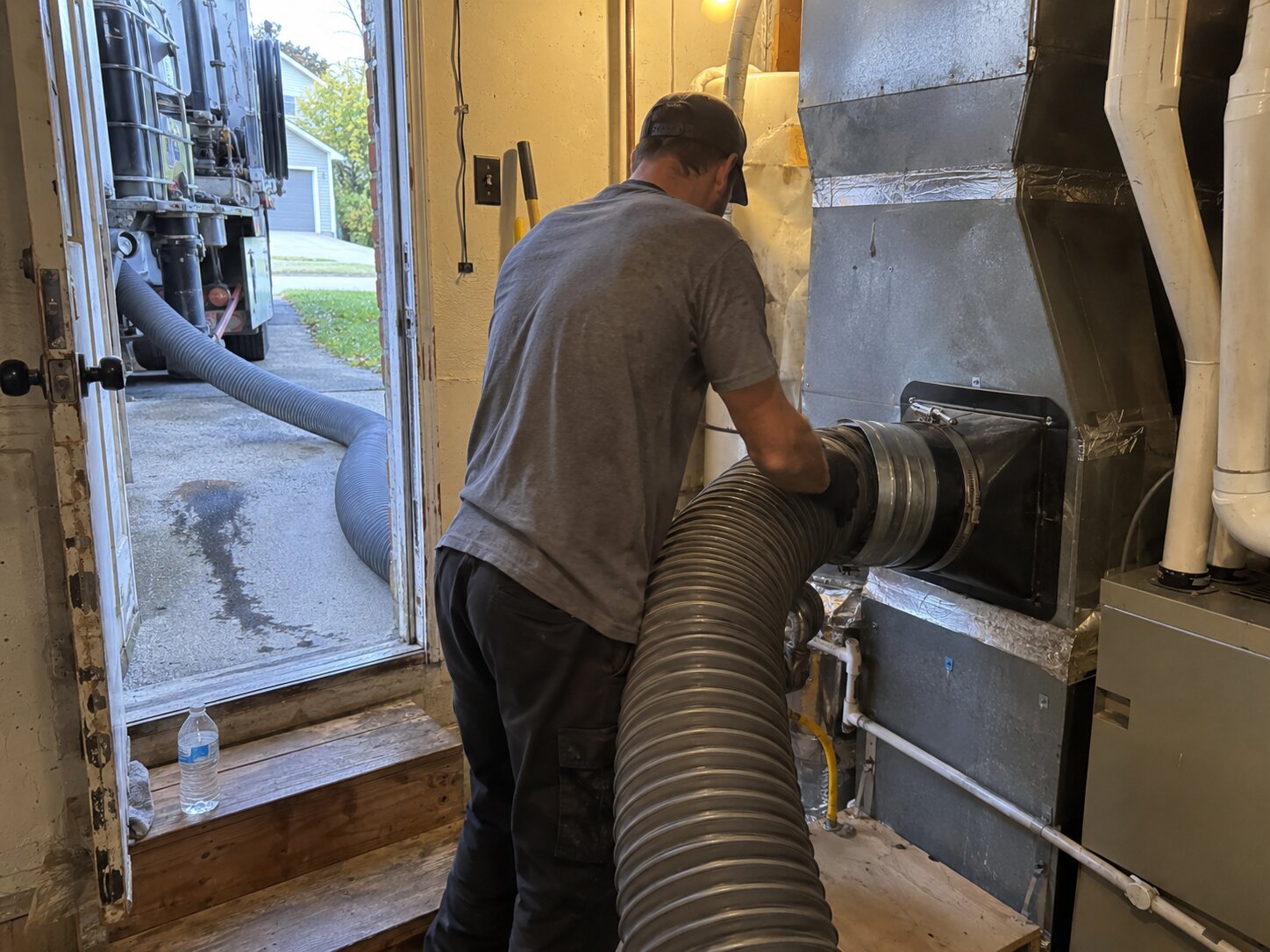
- Negative pressure setup. A high-volume negative-air machine with HEPA filtration is connected to the duct system at a strategic access point. This creates continuous negative pressure throughout the system during cleaning — debris dislodged by the cleaning process is pulled to the machine, not blown into the home.
- Mechanical agitation. Brushes, air whips, compressed-air tools, and other agitation devices are introduced through each branch and trunk to dislodge accumulated debris from the duct walls. Just running a vacuum without agitation is one of the patterns that gave duct cleaning a bad name — it removes loose surface dust but leaves the embedded material.
- System component cleaning. The supply and return registers, the air handler interior (with caution — some components shouldn’t be wet-cleaned), the blower wheel, and the evaporator coil where accessible are all cleaned. The blower wheel and coil are often the highest-impact items.
- Filter replacement. A new filter is installed before the system is brought back online so all the loose particulate stirred up by cleaning doesn’t immediately hit the old filter.
- Final inspection and documentation. Before-and-after photos, written documentation of what was found and what was done. You should see the difference, not just take our word for it.
What Duct Cleaning Costs — And Why “$89 Specials” Are a Warning Sign
Proper duct cleaning to NADCA standards takes a crew several hours, requires substantial equipment (a serious negative-air machine alone runs into the thousands of dollars), and involves real labor at each register, branch, trunk, and air handler component. Pricing that reflects that reality is typically several hundred dollars at minimum for a typical home, often more depending on system size and accessibility.
The “whole-home duct cleaning for $89” offers operate on a different model: a vacuum at the return, brief work at a few registers, then a sales pitch for “found mold” or “needed sanitization” that turns the visit into a multi-thousand-dollar invoice. The FTC and state attorneys general have prosecuted operators of this pattern repeatedly. If the price seems too good to be true, it is.
Duct Sealing: Often the Higher-Value Service
Many Lexington homes — particularly older ones with original ductwork — benefit more from duct sealing than from duct cleaning. Leaky ducts in unconditioned spaces (basements, crawl spaces, attics) lose conditioned air, pull in unconditioned and often humid air, and create the negative-pressure conditions that draw in dust, moisture, and pest entry points. Mastic sealing or aerosol sealing of the duct system can dramatically improve HVAC efficiency, reduce dust infiltration, and eliminate some of the conditions that contaminate ducts in the first place. We’ll discuss honestly whether sealing, cleaning, or some combination is the right answer for your situation.
Frequently Asked Questions
- Does duct cleaning really help with dust and allergies?
- Sometimes, often not. Duct cleaning helps when the ducts are genuinely contaminated — visible buildup, mold, rodent debris, post-construction debris. It helps less when the dust source is elsewhere in the home (textiles, pets, outdoor infiltration), which is the more common situation. The EPA’s official position is that duct cleaning has not been shown to prevent health problems in most cases. We assess honestly before recommending the service.
- How often should I have my ducts cleaned?
- Not on a regular schedule, despite what marketers say. The EPA does not recommend routine duct cleaning the way it recommends annual HVAC service or filter changes. Clean ducts when there’s a specific indication: visible contamination, mold, rodent or pest evidence, post-construction debris, or after a major event like a fire or flood. Otherwise, regular filter changes and a clean evaporator coil are the higher-value maintenance.
- Why do I see ads for $89 duct cleaning?
- Be careful with those offers. Proper duct cleaning to NADCA standards involves substantial equipment, time, and labor; pricing reflects that. The very-low-cost offers typically use the visit to upsell into much larger invoices, often for “found mold” or “needed sanitization” diagnosed during the work. The FTC and state attorneys general have prosecuted operators of this pattern repeatedly.
- What’s the difference between duct cleaning and duct sealing?
- They address different problems. Duct cleaning removes contamination already inside the ducts. Duct sealing closes leaks in the duct system that let conditioned air escape and unconditioned air infiltrate. For many Lexington homes, especially older ones with leaky basement-routed ducts, sealing delivers more measurable benefit (efficiency, comfort, dust reduction) than cleaning. We can assess both and recommend what actually helps.
- How do I know if my ducts really need cleaning?
- Visual evidence is the best indicator: substantial visible dust at registers when you pop a grille off, biological growth in accessible duct sections, evidence of rodent or pest activity, a recent renovation that wasn’t sealed off properly. We’re glad to inspect and tell you honestly — including telling you no when no is the right answer.
Get an Honest Duct Cleaning Assessment
If you suspect your ducts genuinely need cleaning — or if you’ve been pressured by a contractor offering a “special” — we’ll inspect, assess, and tell you the truth. Across Lexington and Fayette County.
- Phone: (859) 215-5241
- Address: 343 Cassidy Ave, Lexington, KY 40502
- Email: [add business email before publishing]