
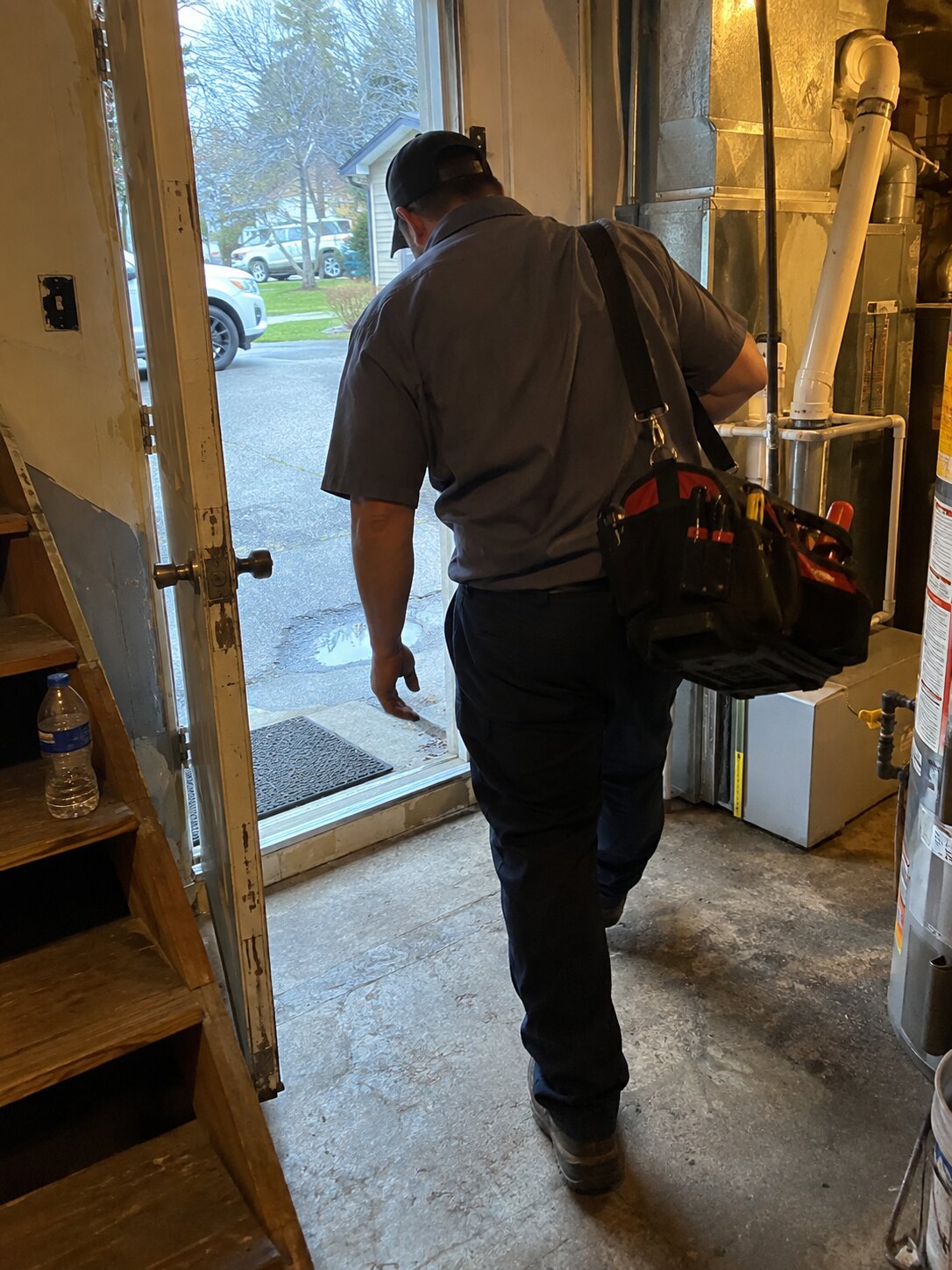
HVAC Inspection in Lexington, KY
An HVAC inspection isn’t a tune-up, and the distinction matters. A tune-up restores a system to running condition; an inspection evaluates a system to tell you what you’ve got, what shape it’s in, and what you should expect from it. The two services have different goals, different deliverables, and different occasions. You schedule an inspection when you’re buying a home and the standard home inspector’s checkmark of “HVAC system functional” isn’t enough information. When a manufacturer’s warranty is about to expire and you want a documented baseline. When you’re planning a kitchen remodel that depends on the existing system handling additional load. When the seller’s disclosure on a property you’re considering described the furnace as “newer” and you’d like that verified. Lexington Heating and Air provides documented HVAC inspections across Fayette County — the kind that produce a written report with photos, measurements, and honest findings rather than a verbal “looks fine.”
When You Need an HVAC Inspection
Buying a Home
The HVAC line on a standard home inspection report is typically a single paragraph stating that the system was operating at the time of inspection. That’s better than no inspection, but it doesn’t tell you about a heat exchanger nearing failure, an evaporator coil with developing formicary corrosion, R-22 refrigerant on an older AC, ductwork sized for different equipment, or a furnace that’s two years from end-of-life. A dedicated HVAC inspection by an HVAC professional — ideally before closing, certainly before the inspection contingency expires — produces an actionable report on what you’re actually buying.
Selling a Home
Some sellers want the HVAC inspected before listing so they can disclose accurately, address findings before buyers raise them, and avoid the deal-killing surprise at the buyer’s inspection. An inspection with documented findings is also a credibility signal in listing — “HVAC inspected by licensed contractor, report available” is different from “HVAC in working order.”
Before Warranty Expiration
If your manufacturer warranty is approaching its end (typically 5 or 10 years for parts on most residential equipment), an inspection now catches developing problems while they’re still covered. Heat exchanger cracks, compressor issues, control board failures — expensive components frequently still under warranty if they fail before the deadline. The inspection cost is small insurance against an out-of-pocket replacement six months after the warranty lapsed.
Before a Renovation
Adding a bonus room, finishing a basement, expanding a kitchen, or converting an attic all change the load on your HVAC system. An inspection evaluates whether your current equipment can handle the new load, whether the duct system can deliver air to the new spaces without creating problems in the existing ones, and what modifications might be needed. Better to know before the contractor starts than after.
Before Replacement
If you’re approaching the end of your HVAC system’s life and considering replacement options, an inspection establishes the actual condition of what’s there. Sometimes the existing system has more life than the homeowner assumed; sometimes less. Either way, the decision benefits from real information rather than rough guessing.
After Inheritance or Major Life Change
If you’ve inherited a home, bought a property at auction, or are taking over a property without documentation of its HVAC history, an inspection establishes the baseline you’ll work from going forward.
What Our Inspection Covers
- Equipment age, make, model, and serial number documentation for all major components — furnace, AC condenser, indoor coil, air handler, water heater, boiler if present. This information cross-references against manufacturer warranty databases, recall lists, and known issues with specific models.
- Visual inspection of all accessible components, including heat exchanger inspection with a borescope camera, coil condition, refrigerant line set and insulation, ductwork accessibility, condensate drainage, and air handler interior.
- Combustion analysis on gas equipment with a calibrated analyzer — CO and O₂ in flue gas, CO measurement in supply air at multiple registers, flue temperature, computed combustion efficiency.
- Refrigerant system evaluation on cooling equipment — pressure measurements, superheat and subcooling against design values, leak indicators if pressures suggest a problem. We note the refrigerant type (a 20-year-old system still on R-22 has cost implications going forward; R-410A systems face their own transition timeline).
- Electrical inspection — service disconnect, contactor condition, capacitor microfarad measurements against rated values, wiring condition at the unit, motor amperage measurements against nameplate.
- Static pressure measurement across the air handler — a high reading indicates duct restriction, filter issues, or oversized equipment for the duct system.
- Duct system assessment — visible duct condition, insulation, support, accessible joints, signs of leakage or contamination. Full assessment may require a separate detailed duct inspection.
- Combustion air verification on gas equipment — adequate make-up air, backdraft testing where appropriate.
- Safety devices verification — pressure switches, high-limit switches, flame sensors, condensate float switches, CO detectors and smoke detectors in the home.
- Written report with photos. Findings documented with images, severity assessment (immediate safety issue / repair needed soon / monitor / informational), and our honest assessment of remaining service life. We don’t condemn anything we can’t show you on camera or with measurements.
What We Look For Specifically in Lexington Homes
- R-22 refrigerant. Production ended January 2020, so any system still on R-22 is operating on inventory and recycled refrigerant. Repair costs are high ($100–200 per pound for refrigerant alone), and replacement becomes more economical sooner. Documenting refrigerant type matters for buyers.
- Heat exchanger condition on furnaces, particularly units 15+ years old where thermal fatigue is statistically more likely.
- Formicary corrosion on evaporator coils — the microscopic pinhole leaks driven by indoor VOC chemistry that are common in homes 5+ years old.
- Condensate trap and drain condition on high-efficiency furnaces — specifically a hard-water-climate issue in our region.
- Ductwork in historic homes — sized for older equipment, possibly carrying asbestos-insulated sections in pre-1980 installations.
- CO detector status and placement — functional, current, on every level, outside sleeping areas.
- Combustion air pathway in tightly built newer construction where insufficient air can cause backdrafting.
How Our Inspection Differs From a Home Inspector’s HVAC Section
Standard home inspectors are generalists qualified to assess a wide range of building systems. They typically verify HVAC equipment is functional, document age and apparent condition, and flag obvious problems. They generally don’t perform combustion analysis, don’t measure refrigerant pressures, don’t borescope heat exchangers, and don’t evaluate sizing or specification compliance. None of this is criticism — it’s outside their licensing and equipment.
A dedicated HVAC inspection by an HVAC professional is the equivalent of having a roofing contractor evaluate the roof or an electrician evaluate the electrical panel: deeper expertise, specialized equipment, more actionable findings. The two services complement each other.
Frequently Asked Questions
- What’s the difference between an HVAC inspection and a tune-up?
- A tune-up restores a system’s running condition through cleaning, calibration, and small repairs. An inspection evaluates a system’s condition, safety, and remaining service life to inform a decision — buying a home, planning a renovation, deciding when to replace. Tune-ups happen on schedule (typically biannually); inspections happen on occasion. Some inspection work overlaps with tune-up work, but the goal is documentation rather than restoration.
- Should I get an HVAC inspection before buying a home?
- Yes, especially if the home is older or the seller’s disclosure on HVAC is vague. The standard home inspection’s HVAC section is typically a single paragraph confirming the system was operating. It doesn’t catch a cracked heat exchanger, formicary corrosion in the coil, R-22 refrigerant, or a furnace nearing end of life. A dedicated inspection by an HVAC professional gives you actionable information for purchase decisions.
- How long does an HVAC inspection take?
- Typically 90 minutes to two hours for a residential system, depending on complexity (single-zone forced air vs. multi-zone, with or without boiler, with or without IAQ accessories). The deliverable is a written report with photos and findings, which is prepared and sent after the visit. Time on-site is roughly twice that of a routine tune-up because the work is documentary rather than restorative.
- Will an HVAC inspection void my home inspection?
- No — the two are independent and complementary. Most buyers schedule both during the inspection contingency window: a standard home inspection covering all building systems, and a dedicated HVAC inspection for the depth of assessment a generalist can’t provide. The findings of one don’t affect the other.
- What if your inspection finds problems?
- You receive a written report with photos and findings, ranked by severity (immediate safety issue, repair needed soon, monitor, informational). What you do with that information is up to you. For pre-purchase inspections, the report supports negotiation with the seller or informed walk-away. For owners, the report supports planning — what to address now, what to budget for, what to monitor. We don’t pressure you toward repairs at the moment of inspection.
Schedule an HVAC Inspection in Lexington
Before you close on the house, expand the kitchen, or accept the seller’s description of the furnace as “newer,” get a documented inspection. Across Lexington and Fayette County.
- Phone: (859) 215-5241
- Address: 343 Cassidy Ave, Lexington, KY 40502
- Email: [add business email before publishing]