
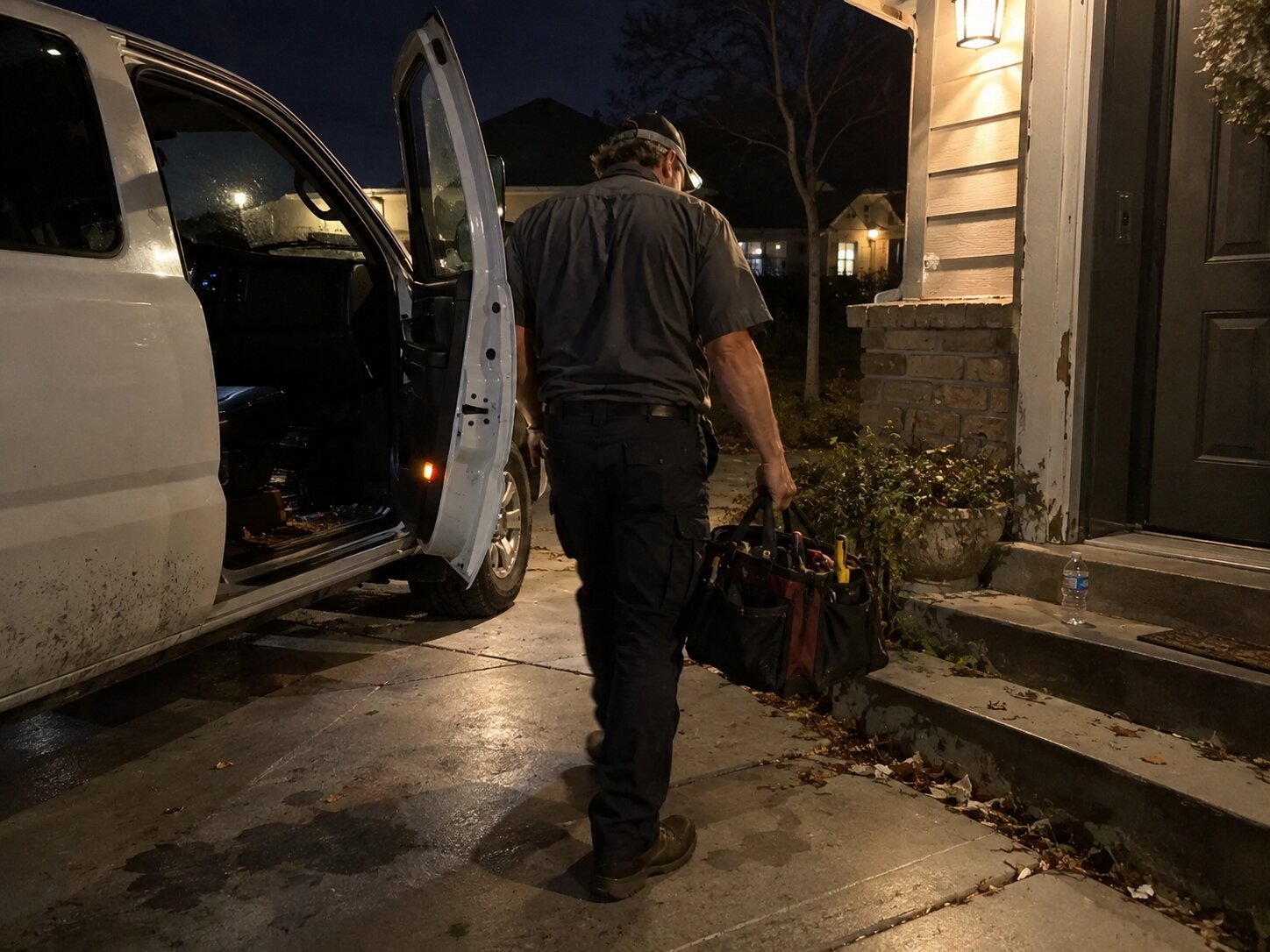
Emergency HVAC Repair in Lexington, KY
There are routine repairs, and there are emergencies. The HVAC system that quits on a 67°F October afternoon is the first kind — inconvenient, fixable on schedule, no urgency. The system that quits on a 14°F January night with an infant in the house is the second — genuinely time-sensitive, sometimes a safety situation, requiring a response calibrated to the stakes. The same physical failure, two completely different problems for the homeowner. Lexington Heating and Air responds to emergency HVAC calls across Fayette County the way emergencies deserve to be handled: fast dispatch, diagnostic equipment on the truck, the parts that fix the most common Lexington failure modes carried as standard inventory, and the honesty to tell you whether the symptom is genuinely an emergency or whether it can safely wait until morning.
What Counts as a Real HVAC Emergency
Heating Emergencies (Winter)
- No heat with sustained outdoor temperatures below freezing. Indoor temperatures dropping rapidly. Particularly time-sensitive with infants, elderly residents, anyone with health conditions, or pets unable to leave.
- Pipe freeze risk. Once a home drops below about 55°F sustained, plumbing — especially in exterior walls or crawl spaces — starts approaching freeze territory. A burst pipe is a far more expensive emergency than a furnace repair.
- Smell of gas. Not an HVAC emergency exactly — leave the building, call 911 or the gas utility, then call us. See our gas line page for the full protocol.
- CO detector alarming. Leave the building immediately; call emergency services; we follow up with combustion testing and source identification.
- Banging, soot, or yellow flame on a gas appliance — signs of combustion problems that warrant immediate professional attention before the situation worsens.
- Sustained system noise indicating mechanical failure in progress — grinding, screeching, knocking that wasn’t there before.
- Visible water from a furnace on a high-efficiency unit — a sign of condensate-system failure that can become a flood and a no-heat call simultaneously.
Cooling Emergencies (Summer)
- No cooling with sustained outdoor temperatures above 90°F and heat index above 100°F. The CDC and National Weather Service treat sustained high heat as a public health emergency, particularly for elderly residents, young children, those with chronic conditions, and homes without alternative cooling. A no-cool call during a Lexington heat advisory is a different situation than the same call on a mild June day.
- System running but not cooling with high indoor temperatures and rising. Often a frozen evaporator coil, low refrigerant from a leak, or a compressor failure.
- Tripped breaker on the outdoor unit that resets and trips again — almost always a real electrical or compressor problem, not a nuisance trip.
- Visible water around the indoor unit, indicating condensate drain failure that can damage flooring and ceilings below.
- Burning smell from the air handler or condenser — an electrical issue that should be diagnosed before further damage.
Year-Round Emergencies
- Electrical fire indicators — smoke, burning insulation smell, repeatedly tripping breaker, visible damage. Don’t run the system; call us.
- Storm or impact damage — tree fallen on the outdoor unit, ice damage to a heat pump, hail damage, flooding affecting equipment.
- Active refrigerant leak — not just low refrigerant, but visible oil spotting indicating active loss, particularly with the newer A2L refrigerants now in use on 2025+ systems.
What’s NOT Usually an Emergency
Equally important to know what’s not urgent enough to justify after-hours pricing:
- Mild weather no-heat or no-cool calls with no health concerns in the household — usually fixable on next-day scheduling.
- Thermostat issues — often fixable by the homeowner (dead batteries, tripped breaker on furnace circuit).
- Filter changes that have caused frozen coils on a system that’s actually running — turn the system off, let the coil thaw, change the filter, restart. Most resolve on their own.
- Uneven heating or cooling in one room when the system overall is functional.
- Slight efficiency loss or rising bills — real maintenance issues but not emergency-paced.
We’ll be straight with you when you call: if your situation can wait safely until next-day scheduling, we’ll say so and offer first-available rather than charging emergency rates. A genuine emergency gets the genuine response.
Why Diagnostic Equipment Matters in Emergencies
The temptation in an emergency call is to fix what looks like the problem fastest and leave. The discipline that produces better outcomes is the opposite: take the time to diagnose with measurements, then fix what’s actually wrong. A furnace that won’t fire could be a $15 flame sensor cleaning or a $300 igniter replacement or a $800 inducer motor or a $1,200 control board — all with the same symptom from across the room. The cost difference compounds when the wrong part is replaced and the system still won’t run. We carry the diagnostic equipment (combustion analyzer, manometer, refrigerant gauges, multimeter, clamp meter, borescope) on every truck precisely because the emergency call is when getting the diagnosis right matters most.
Parts on the Truck
An emergency repair where the technician has to leave to source the part isn’t really an emergency response — it’s two service calls separated by a parts run. We stock the parts that fix the most common Lexington failure modes as standard truck inventory:
- Flame sensors and hot surface igniters (the single most common no-heat repair).
- Run and start capacitors in the most common values for residential AC and furnace use.
- Contactors, transformers, and basic control components.
- Pressure switches.
- Fan motors in common sizes.
- Thermostats and basic wiring components.
- Refrigerant for the most common types (R-410A, R-454B).
- Condensate pumps and basic plumbing for condensate work.
Less common parts — gas valves for specific manufacturers, control boards for specific models, OEM-specific items — require a parts run or next-day delivery. We’ll tell you straight whether the fix can be completed today or whether it’s a same-day-temporary, next-day-permanent situation.
Frequently Asked Questions
- Do you offer 24/7 emergency HVAC repair?
- [Confirm your specific emergency availability before publishing — whether 24/7 or after-hours service is offered, the emergency phone number or call routing, and any associated fees. A clear answer here matters for the homeowner facing a no-heat call on a 14°F night or a no-cool call during dangerous summer heat.]
- Is my situation a real emergency?
- Generally yes if any of the following: no heat with sustained outdoor temperatures below freezing, particularly with vulnerable household members; no cooling during a heat advisory or with sustained heat index above 100; smell of gas; CO detector alarming; smoke, burning smell, or visible electrical damage at the equipment; storm or impact damage. Generally no if the weather is mild and household members are not vulnerable. Call us; we’ll tell you straight which category yours falls in.
- How fast can you respond?
- It depends on demand, weather conditions, and the type of emergency. Response is faster during off-peak periods and slower during the days when half the city is calling (the first cold snap, an extended heat advisory, the morning after a storm). We prioritize true safety situations and vulnerable households. When you call, we’ll give you a realistic time estimate, not a sales-script answer.
- What does emergency HVAC repair cost?
- Emergency calls outside normal business hours typically include after-hours pricing on top of the standard diagnostic and repair charges. Specific rates depend on the time of the call, the type of work, and parts required; we quote the diagnostic charge upfront when you call, and any repair pricing after the technician has actually diagnosed the issue. No surprises.
- Should I keep using my furnace or AC until you arrive?
- For most no-heat or no-cool situations, yes. For situations involving gas smell, CO detector alarms, visible smoke or fire signs, or active water damage, no: shut the system off at the breaker, leave the building if gas or CO is involved, and call from a safe location. We’ll give you specific guidance based on what’s happening when you reach us.
Call When the Situation Warrants It
If the weather is bad and the system has quit, we’ll triage on the phone — tell you whether it’s a real emergency or whether you can safely wait until first-available, give you a realistic response window if it is, and arrive with diagnostic equipment and the common parts. No upselling a routine repair into an emergency, no understating the urgency of one that genuinely needs it. Across Lexington and Fayette County.
- Phone: (859) 215-5241
- Address: 343 Cassidy Ave, Lexington, KY 40502
- Email: [add business email before publishing]