
AC Installation in Wilmore, KY: A Heat Pump That Ends the Electric-Heat Bills, Start to Finish
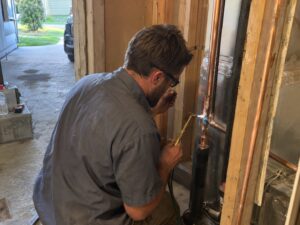
A composite drawn from the AC installations we run across Jessamine County. The assessment, equipment decisions, and commissioning measurements are real to how we work; the customer name, exact address, and dollar figures are left out for privacy. This isn’t a customer testimonial — see our testimonials page for actual reviews.
A number of Wilmore’s smaller and older homes — some of the housing around Asbury and the Main Street district — were heated with electric resistance: baseboard heat or an old electric furnace, the most expensive common way to heat a home. When those owners want to add real air conditioning, there’s an opportunity most don’t realize: a heat pump provides the cooling they want and replaces that costly electric-resistance heat with heating that’s two to three times more efficient. A homeowner near campus calls wanting better cooling than their window units, and the conversation quickly becomes about the winter bills too. Here’s how that project takes shape.
The Scenario
A modest two-story near downtown Wilmore, roughly 1,600 square feet, currently cooled by window units and heated by electric baseboard. The owner is tired of the noisy, uneven window-unit cooling and has been bracing for high electric bills every winter. There’s existing ductwork from a long-ago system in fair condition, though we evaluate whether to use it or go ductless. The owner wants comfortable cooling and would happily cut the heating bills if it pencils out.
What We Did on the Assessment
- Whole-home walk-through — existing electric heat, any usable ductwork, electrical service and capacity, and the owner’s priorities (cooling first, with winter operating cost a strong secondary).
- Manual J load calculation for the actual envelope, sized for both the cooling load and the heating load, since the heat pump now does both jobs.
- The electric-heat math. Electric resistance converts a unit of electricity into roughly a unit of heat; a heat pump moves two to three units of heat per unit of electricity in central Kentucky’s mild winters. We laid out honestly how much of the winter the heat pump would carry and what that does to the bills.
- Ducted vs. ductless decision — evaluated whether the existing ductwork could serve a ducted heat pump well, or whether a ductless mini-split would deliver better zoned comfort for this layout.
- Backup heat plan. Determined how the home would handle the coldest hours — the heat pump carries most of the season, with a sensible backup strategy for hard cold.
- Electrical review and an itemized written estimate including equipment, labor, refrigerant, electrical, the City of Wilmore permit, disposal of old equipment, and commissioning.
The Equipment Selection Conversation
- Why a heat pump is the standout here. It delivers the cooling the owner came for and, because it heats far more efficiently than electric resistance, it directly attacks the winter bills that were the bigger pain point. One piece of equipment solves both.
- Ducted vs. ductless. Where existing ductwork is sound, a ducted heat pump is straightforward; where it isn’t, or where zoning matters, a ductless mini-split fits an older home well with minimal intrusion.
- Cold-weather performance and backup. Modern heat pumps hold capacity well into cold temperatures; for the hardest hours, a modest backup (retained electric heat or a heat-pump system with integrated backup) covers the gap.
- Refrigerant. New equipment uses R-454B (Opteon XL41), the lower-GWP A2L refrigerant standard since 2025.
- Section 25C. Heat-pump installations generally qualify for the federal credit under more generous terms; we supply the documentation, and the owner confirms eligibility with their tax professional.
The owner chose a heat pump sized to the Manual J for both heating and cooling, configured with appropriate backup for the coldest hours, and qualifying for the Section 25C credit.
The Installation Work
- City of Wilmore permit pulled before work began.
- Window units removed and old electric heat addressed per the chosen configuration (retained as backup or replaced).
- Heat-pump condenser set outdoors on a pad with proper clearances; indoor equipment installed (air handler for a ducted system, or heads for ductless).
- Ductwork used or bypassed per the assessment, sealing and adjusting as needed for proper airflow.
- Electrical — dedicated circuit and disconnect within sight per code, with any service work needed for the heat pump and backup.
- System pressure-tested with nitrogen, evacuated to 500 microns or below, and charged per manufacturer specification.
- Startup and commissioning — refrigerant pressures, superheat and subcooling at design, airflow verified, and the heating and cooling modes plus backup logic confirmed.
- City of Wilmore inspection arranged and completed.
- Walkthrough — operating the system in both modes, what to expect on the winter electric bill, maintenance, warranty registration completed on the owner’s behalf, and documentation for the Section 25C credit.
The Outcome
The home got quiet, even cooling to replace the window units — and, the part the owner hadn’t fully expected, markedly lower winter heating bills, because the heat pump carries most of central Kentucky’s mild winter far more efficiently than the old electric resistance heat. The Section 25C credit, confirmed with the owner’s tax professional, reduced the effective first cost. One project solved the cooling complaint and the heating-bill complaint together.
Where Your Situation Might Differ
- A home already on gas heat has a different math — often a straight AC or a dual-fuel heat pump paired with the existing furnace rather than a heat pump replacing electric resistance.
- Where there’s no usable ductwork, a ductless mini-split is frequently the better fit for an older home.
- Homes in very cold climates lean harder on backup heat; central Kentucky’s milder winters are what make the heat-pump savings so strong here.
- An electrical service that can’t support the new equipment may need an upgrade, which we identify during the assessment.
Pricing Framework
Specific dollars vary with equipment, whether the system is ducted or ductless, and any electrical work, so instead of a number that won’t fit your home, here’s how heat-pump installation costs in Wilmore tend to tier:
- Single-zone ductless or modest ducted heat pump — lowest first cost, big efficiency gain over electric resistance.
- Multi-zone ductless or full ducted heat pump — whole-home comfort scaling with size and zones, Section 25C eligible.
- High-tier variable-capacity / cold-climate heat pump — highest first cost, best efficiency and cold-weather performance.
The itemized estimate after the Manual J assessment includes every component: equipment, labor, refrigerant, electrical, any duct work, permit, disposal, and commissioning.
Frequently Asked Questions
- Is this a real customer’s project?
- It’s a composite built from the AC installations we do regularly in Wilmore and across Jessamine County, not one named customer’s account. The assessment, equipment decisions, and commissioning are accurate to how we actually work; the name, address, and figures are left out for privacy. For real customer reviews, see our testimonials page.
- I just want AC. Why are you talking about heating?
- Because a heat pump is an air conditioner that also heats, and if your home runs on electric-resistance heat, the same equipment that cools you in summer can cut your winter heating bills substantially. It’s a two-for-one most homeowners on electric heat don’t realize is available when they call about cooling.
- How much can a heat pump save over electric baseboard or an electric furnace?
- Electric resistance turns roughly one unit of electricity into one unit of heat; a heat pump moves two to three units of heat per unit of electricity in central Kentucky’s mild winters. The exact savings depend on your home and rates, which we estimate honestly during the assessment rather than promising a figure.
- What happens on the coldest days?
- Modern heat pumps hold capacity well into cold temperatures, and for the hardest hours we configure a sensible backup — retained electric heat or integrated backup heat — so you’re covered. The heat pump still carries most of the season efficiently.
- Do you pull the permit in Wilmore?
- Yes. Installations inside the city permit through the City of Wilmore; properties outside the city limits permit through Jessamine County. We pull the permit and arrange inspection as part of the work.
Schedule an AC Installation Assessment in Wilmore
If you want better cooling than window units — and you’re tired of electric-heat bills — get in touch. We’ll run the Manual J, lay out the heat-pump math honestly, and give you the itemized options before anything is ordered.
- Phone: (859) 215-5241
- Address: 343 Cassidy Ave, Lexington, KY 40502