
AC Installation in Nicholasville, KY: A Generational Replacement, Start to Finish
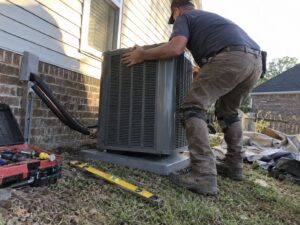
A composite drawn from the AC installations we run across Jessamine County. The assessment, equipment decisions, and commissioning measurements are real to how we work; the customer name, exact address, and dollar figures are left out for privacy. This isn’t a customer testimonial — see our testimonials page for actual reviews.
The replacement wave hitting Nicholasville right now is generational. Subdivisions built during the 1995–2010 development boom — Brannon Crossing, the Vineyard, Edgewood, the Pointe at Brannon, dozens of others — were built with builder-grade HVAC equipment that’s now reaching end of service life simultaneously across the city. The replacement isn’t just a like-for-like equipment swap. It’s an opportunity to undo the original installation’s compromises.
The Scenario
A homeowner in the Vineyard subdivision, home built in 2001. The original 24-year-old 13 SEER R-22 split system suffered a compressor failure last week, and the diagnosis from our earlier visit had pointed clearly toward replacement rather than repair (compressor cost plus R-22 charge plus aging components made repair uneconomical). The homeowner is now in the equipment-selection conversation.
The home is 2,100 square feet, two-story conventional construction. Original-installation ductwork, original vinyl windows, original-spec early-2000s insulation. The homeowner has lived with specific complaints for years: noticeable temperature differential between floors (upstairs warmer in summer), short bursts of cool air rather than sustained cooling cycles, humidity that never quite gets pulled out of the indoor air even when the thermostat reads satisfied. They want to know whether the new installation can fix any of that, or whether they should expect the same performance as before.
The answer: the original installation was probably part of the problem. A new installation done right can address most of the complaints.
What We Did on the Assessment
- Whole-home walk-through with focus on existing system performance complaints. Documented temperature differential between floors, identified rooms farthest from supply registers, evaluated return air pathways.
- Manual J load calculation — room-by-room cooling load based on actual envelope. For this 2001 construction home with original windows and insulation, the load calculation produced a result indicating 3-ton capacity rather than the 3.5-ton equipment the original builder had installed. The original installation had been oversized, which explained the short-cycling and humidity complaints the homeowner had been experiencing.
- Manual S equipment options across 15 SEER2 base-efficiency through 18+ SEER2 two-stage and heat pump options.
- Manual D duct verification — measured static pressure on existing ductwork. The good news: static pressure within acceptable range for properly-sized new equipment. The complication: the original oversized equipment had been working harder than the ductwork was sized for, which explained part of the comfort complaint. Properly-sized new equipment would work within the duct system’s design range.
- Return air assessment — identified inadequate return airflow to the upstairs zone as the underlying cause of the temperature differential. Adding a return duct to the upstairs would substantially improve comfort regardless of equipment choice.
- Itemized written estimate for each equipment option including the additional return duct modification work.
The Equipment Selection Conversation
The conversation worked through several considerations:
- Right-sizing. The original 3.5-ton equipment was oversized for the actual home load; new equipment at 3-ton properly Manual-J-sized would actually deliver better comfort and dehumidification despite “smaller” specifications.
- Single-stage vs. two-stage operation. Two-stage equipment runs at lower capacity most of the time, with high capacity engaging only on the hottest days. For this home with the original short-cycling complaints, two-stage operation would substantially improve comfort even at the proper capacity sizing.
- Straight AC vs. heat pump. The home has a 95% AFUE gas furnace replaced in 2019, still in good condition. Heat pump in dual-fuel configuration would qualify for Section 25C credit under more generous terms than straight AC.
- Return duct modification. Adding the upstairs return would substantially improve performance regardless of equipment, but the cost was real and the homeowner had to decide whether to include it in this installation scope.
- R-22 to R-454B transition. New equipment uses R-454B (Opteon XL41), the lower-GWP A2L refrigerant. Existing R-22 line set could be flushed and reused per manufacturer specifications.
The homeowner chose a 3-ton 16 SEER2 two-stage heat pump in dual-fuel configuration with the existing gas furnace, and chose to include the upstairs return duct modification in this installation scope. The combined package addressed both the equipment replacement and the underlying performance complaints.
The Installation Work
Scheduled across two and a half working days:
- Jessamine County permit pulled before work began.
- Existing R-22 refrigerant recovered per EPA Section 608 protocol.
- Existing equipment removed — outdoor condenser, indoor coil, properly disposed.
- R-22 line set flushed per manufacturer specifications for R-454B use.
- Upstairs return duct installed — new return register location selected for optimal airflow, return duct routed through accessible space, connections sealed.
- New 3-ton heat pump installed — outdoor unit on existing concrete pad with vibration isolation, indoor coil in existing air handler cabinet, electrical disconnect upgraded per code, condensate drain verified with proper pitch and float switch.
- System pressure-tested with nitrogen to verify no leaks at all new connections.
- System evacuated to below 500 microns using high-quality vacuum pump.
- R-454B refrigerant weighed in per manufacturer specification.
- Startup and commissioning — refrigerant pressures verified at startup, superheat and subcooling measured against design values, two-stage operation verified in both low and high stages, static pressure measured to confirm airflow within design range after return duct modification, electrical amperage checks, condensate drainage verified, dual-fuel thermostat configuration tested.
- Jessamine County inspection arranged and completed.
- Walkthrough with homeowner — new thermostat operation including dual-fuel logic, what to expect from the new system, maintenance schedule, warranty registration completed, documentation provided for Section 25C tax credit support.
The Outcome
System running at design specifications with documented commissioning measurements. The right-sized equipment plus return duct modification together addressed the underlying performance complaints: temperature differential between floors reduced substantially, two-stage operation eliminated the short-cycling that had produced humidity issues, properly-sized capacity delivered better dehumidification despite the “smaller” equipment specification. Operating costs during the first full cooling season measured meaningfully lower than the previous equipment, reflecting both the efficiency tier improvement and the right-sizing. Section 25C tax credit eligibility on the heat pump installation, confirmed by the homeowner with their tax professional, reduced effective first cost.
Why Right-Sizing Matters More Than the Spec Sheet Suggests
A specific point worth pulling out: the original 3.5-ton equipment “felt bigger” and “should have cooled better” by intuition, but the oversizing was actually causing the comfort problems. Short-cycling on the original equipment meant the system never ran long enough to remove humidity from the indoor air; the home stayed cool but clammy. The smaller properly-sized equipment runs longer cycles, removes more humidity, and delivers better comfort — even though the spec sheet shows lower capacity. This is one of the most counterintuitive aspects of HVAC sizing and one of the most common sources of “I want a bigger unit, my house gets too hot” requests that we walk through honestly during the assessment.
What This Profile Doesn’t Cover
- Homes with original ductwork in poor condition may require duct replacement or substantial modification beyond what this scenario covers.
- Newer subdivision homes (2015+) typically have current-code envelope and equipment, with different replacement conversations than growth-era scenarios.
- Heritage construction (pre-1940s) faces different installation challenges, often including ductless mini-split considerations.
- Rental property installations weight different priorities than this owner-occupant scenario.
Pricing Framework
For AC installation in Nicholasville with growth-era replacement scenario:
- Base-tier installation — 15 SEER2 straight AC, like-for-like replacement.
- Mid-tier installation — 16-17 SEER2 two-stage or heat pump with Section 25C credit eligibility on qualifying tiers.
- High-tier installation — 18+ SEER2 variable-capacity equipment with maximum comfort and operating cost benefits.
- Ductwork modifications when needed — varies by scope; this scenario’s return duct addition was moderate cost.
Frequently Asked Questions
- Why is right-sizing better than just installing the same capacity as before?
- Because original installations were often oversized using rule-of-thumb sizing rather than Manual J calculation. Oversized AC short-cycles, doesn’t dehumidify well, wears components faster, and costs more to operate. Properly-sized equipment runs longer cycles, removes more humidity, lasts longer, and operates more efficiently — even at “smaller” capacity specifications.
- How long does a typical AC installation take in Nicholasville?
- For straightforward conventional installation with existing compatible ductwork: typically one to one and a half working days. Installations involving ductwork modifications, electrical upgrades, or significant scope additions can take longer.
- Should I add ductwork modifications during AC installation?
- When the existing ductwork is the underlying cause of performance complaints, addressing it during equipment replacement is more cost-effective than addressing it separately later. We measure static pressure and evaluate return air pathways during the assessment, then discuss whether modifications are worth including in installation scope.
- How is Section 25C tax credit handled?
- We provide equipment specifications and AHRI matchup documentation supporting your tax filing. Confirm specific eligibility, credit amounts, and annual limits with your tax professional. Heat pump installations generally qualify under more generous terms than straight AC alone.
- Do you handle Jessamine County permits?
- Yes. AC installations in Nicholasville requiring permits go through Jessamine County rather than LFUCG. We pull permits as part of the work where required and arrange inspection.
Schedule an AC Installation Assessment in Nicholasville
If you’ve been deferring AC replacement on growth-era equipment and want to understand what the right-sizing and equipment selection conversation looks like for your specific home, get in touch.
- Phone: (859) 215-5241
- Address: 343 Cassidy Ave, Lexington, KY 40502